What the video shows
Scene description
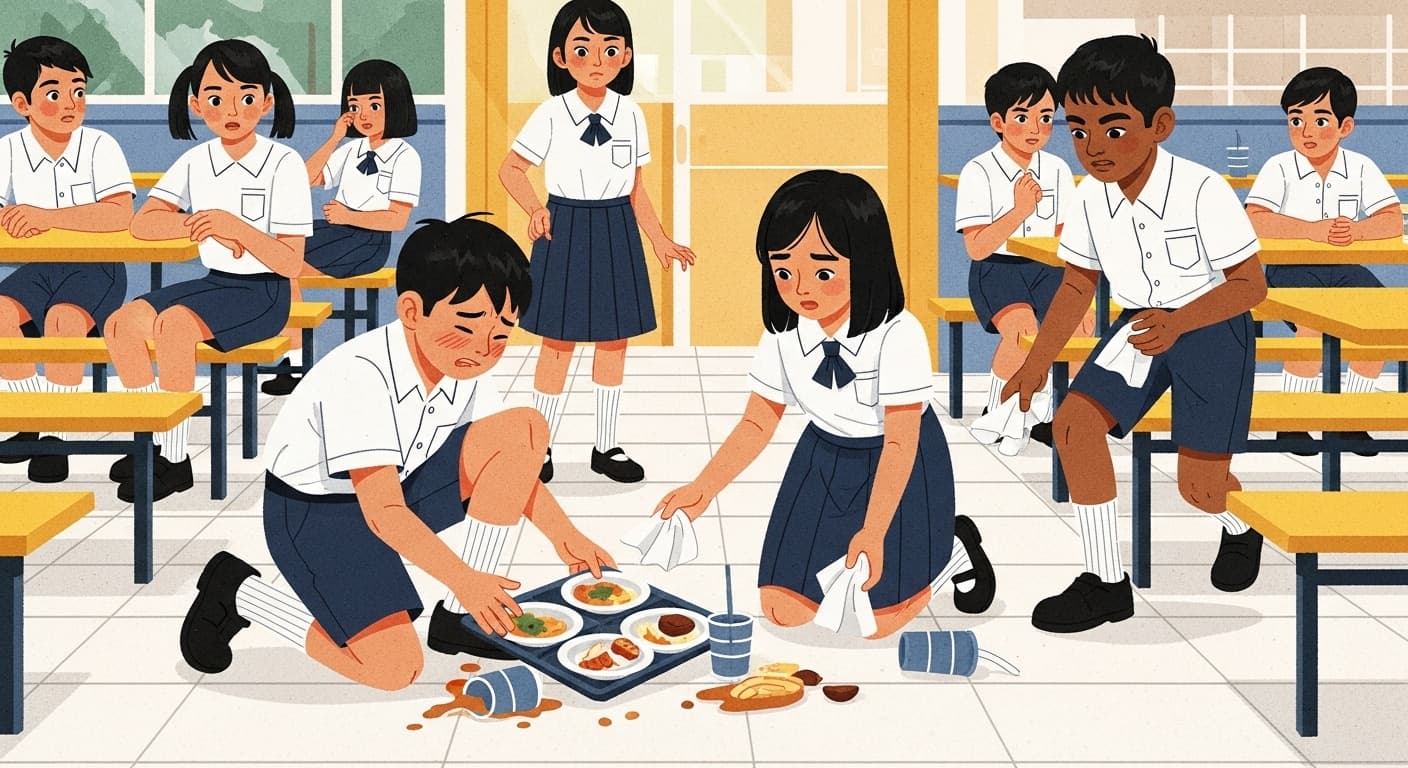
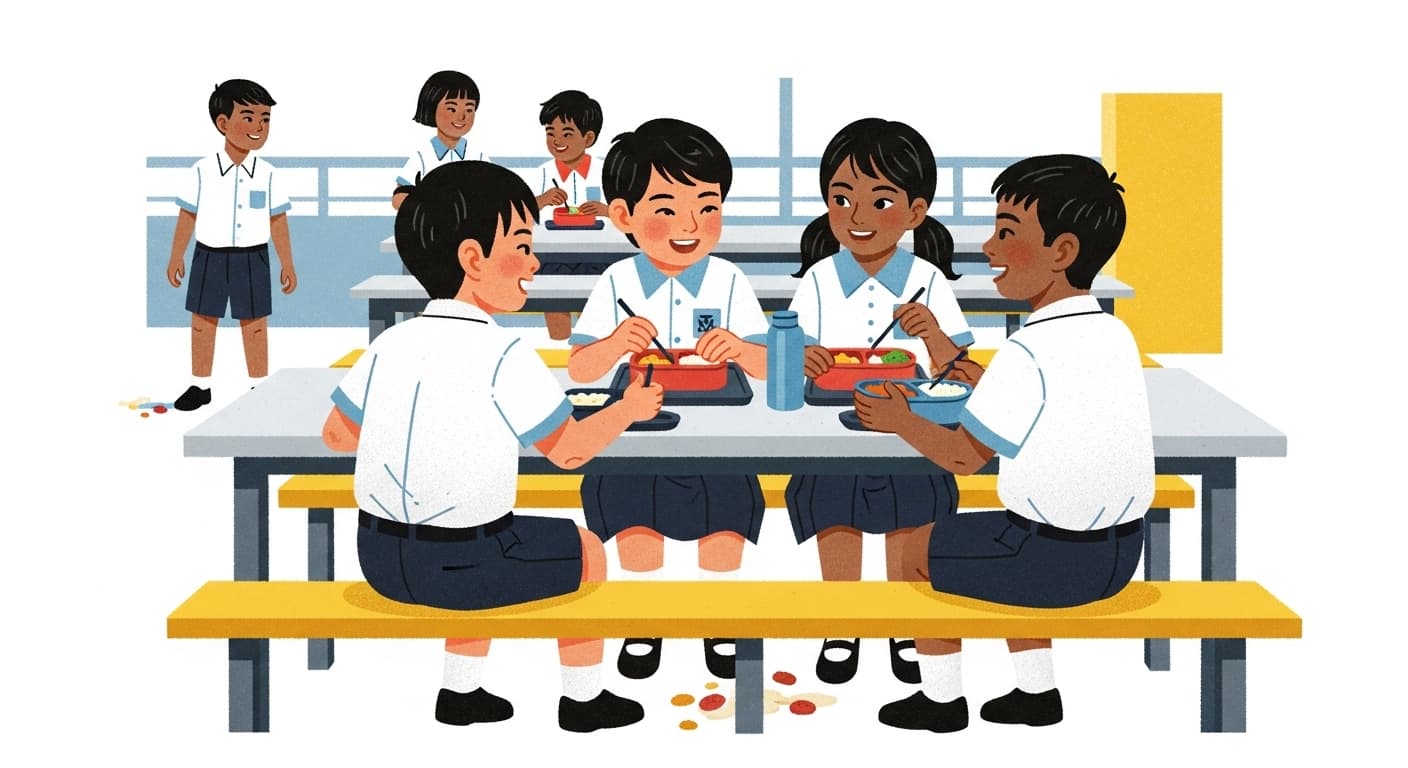
A student spills his lunch tray in the school canteen. Instead of laughing, his classmates help him clean up and share their food.
在学校食堂里,一个男生端着餐盘走过来。不小心,他把饭菜打翻了,食物掉了一地。他蹲在地上,觉得很不好意思。旁边一个戴头巾的女同学马上蹲下来帮他捡,另一个男同学也拿来纸巾帮忙擦。最后,三个人坐在一起,两个同学把自己的食物分给了他,大家开开心心地一起吃饭。

Three questions the examiner might ask
你看到了什么?短片中发生了什么事?
What did you see? What happened in the video?
你有没有帮助过同学或朋友?请说一说当时的情况。
Have you ever helped a classmate or friend? Please describe what happened.
有人说,帮助别人时,自己也能学到新的东西。你同意吗?为什么?
Some people say that when we help others, we also learn new things ourselves. Do you agree? Why?
Q1 tests what happened in the video. Q2 tests a personal experience. Q3 tests reasoning — usually a 你同意吗 (Do you agree?) format that rewards a clear position with a real example.
A model 高分 answer (P.E.E.L.)
Point
我同意帮助别人时,自己也能学到很多东西。
I agree that when we help others, we also learn many things ourselves.
Explain
因为帮助别人需要我们关心他人,也需要动脑筋想办法解决问题。这两件事都让我们成长。
Because helping others requires us to care about people and also use our brains to solve problems. Both of those things help us grow.
Example
上个学期,我帮一位同学补习数学。他不太明白分数的概念,我反复用不同的方法讲了几次。为了让他听懂,我自己反而把这个知识点学得更扎实了。最后他的分数进步了,我也比以前更喜欢数学了。
Last semester, I helped a classmate with maths. He didn't really understand fractions, so I had to explain it several times in different ways. To make him understand, I actually solidified my own knowledge of the topic. In the end, his marks improved — and I ended up liking maths more than before too.
Link
所以帮助别人不只是给予,自己也能在过程中成长。这就是「教学相长」的道理。
So helping others isn't only about giving — we also grow in the process. That's exactly what the saying 教学相长 (teaching and learning enhance each other) means.
Swap in your child's own example — the structure stays the same. Examiners reward concrete detail (a real classmate, a real subject, a real outcome) over polished phrasing.
Common mistakes on this topic
- Saying 帮助别人是好事 (helping others is a good thing) three different ways without a real story. Examiners reward one specific moment over generic moralising.
- Memorising a P.E.E.L. paragraph word-for-word — examiners ask follow-ups, and a rehearsed answer collapses on the second probe.
- Treating Q3's 你同意吗 as yes-or-no. Take a clear side, defend it with one example, and don't flip when the examiner pushes back.
- Forgetting to explain HOW you helped. The score comes from the specifics — what you actually did, what changed, how the person felt.
Vocabulary that works for this topic
- 互相hùxiāng— mutually / each other
同学之间应该互相帮助。
Classmates should help each other.
- 伸出援手shēnchū yuánshǒu— to lend a helping hand
看见有人困难,我们要伸出援手。
When we see someone in trouble, we should lend a helping hand.
- 关心guānxīn— to care about
我们要关心身边的同学。
We should care about the classmates around us.
- 体谅tǐliàng— to be considerate of
我们要学会体谅别人的难处。
We should learn to be considerate of other people's difficulties.
- 友爱yǒu'ài— friendly affection
同学之间应该友爱相处。
Classmates should treat each other with friendly affection.
- 教学相长jiāo xué xiāng zhǎng— teaching and learning enhance each other
老师常说教学相长,学生也是老师的老师。
The teacher often says teaching and learning enhance each other — even students teach the teacher.
For parents
After dinner, ask your child 「今天有没有帮过同学?发生了什么事?」 (Did you help a classmate today? What happened?). Listen for the specifics — the name, the situation, the outcome. That story is exactly what Q2 needs. If they don't have one from today, ask about last week.
Practise this topic now
Run a full 华文 conversation on “互相帮助” with an AI examiner.
Three real examiner questions, instant scoring on the SEAB rubric, and a parent-friendly bilingual breakdown of what to improve. Free for your first 10 sessions.
Practise this topic freeSign in takes 10 seconds · No credit card
Not ready to sign in? Try the free 3-minute diagnostic →
More topics in Community & Helping Others
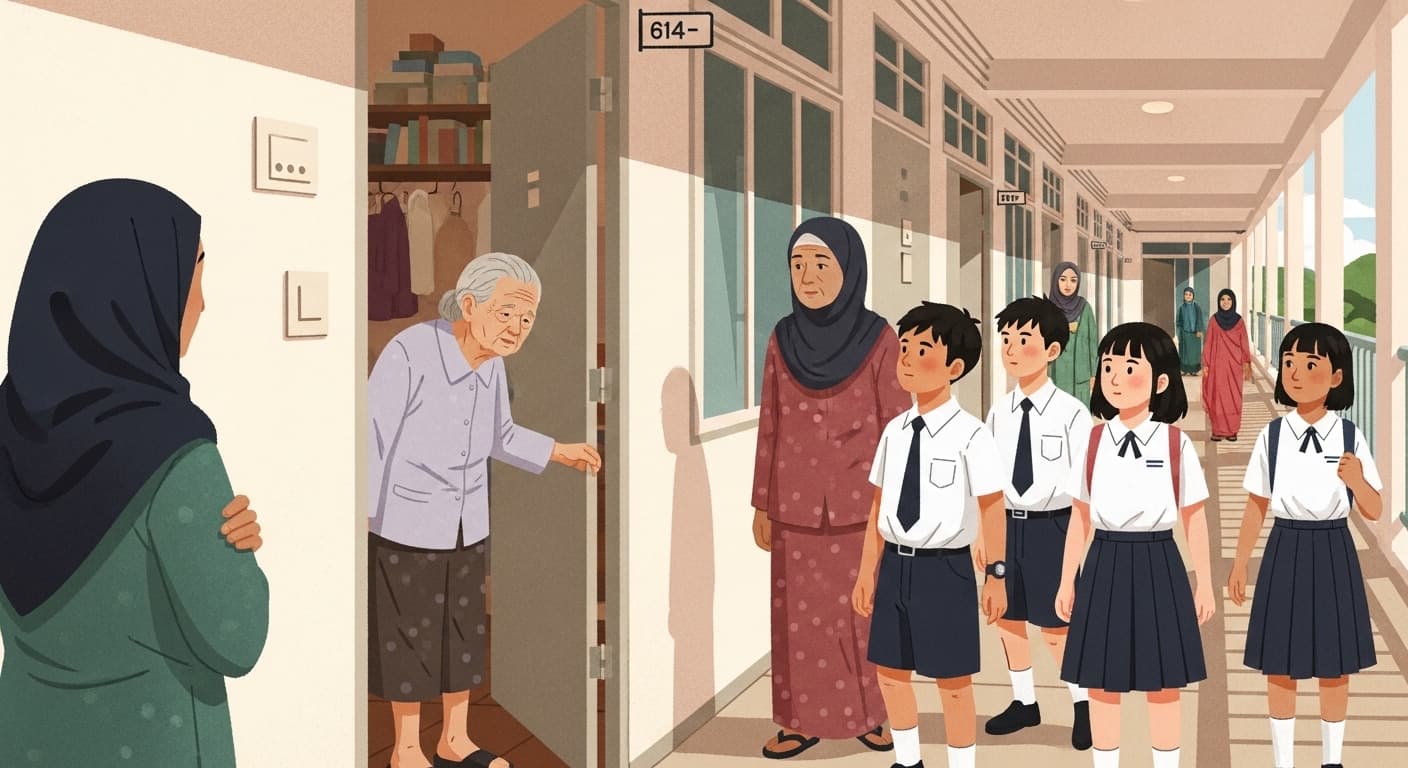
Neighbours Helping Each Other
邻居互助
Neighbour topics need a specific 邻居 — Auntie Tan downstairs, the uncle who feeds stray cats. Anonymous neighbours don't score.
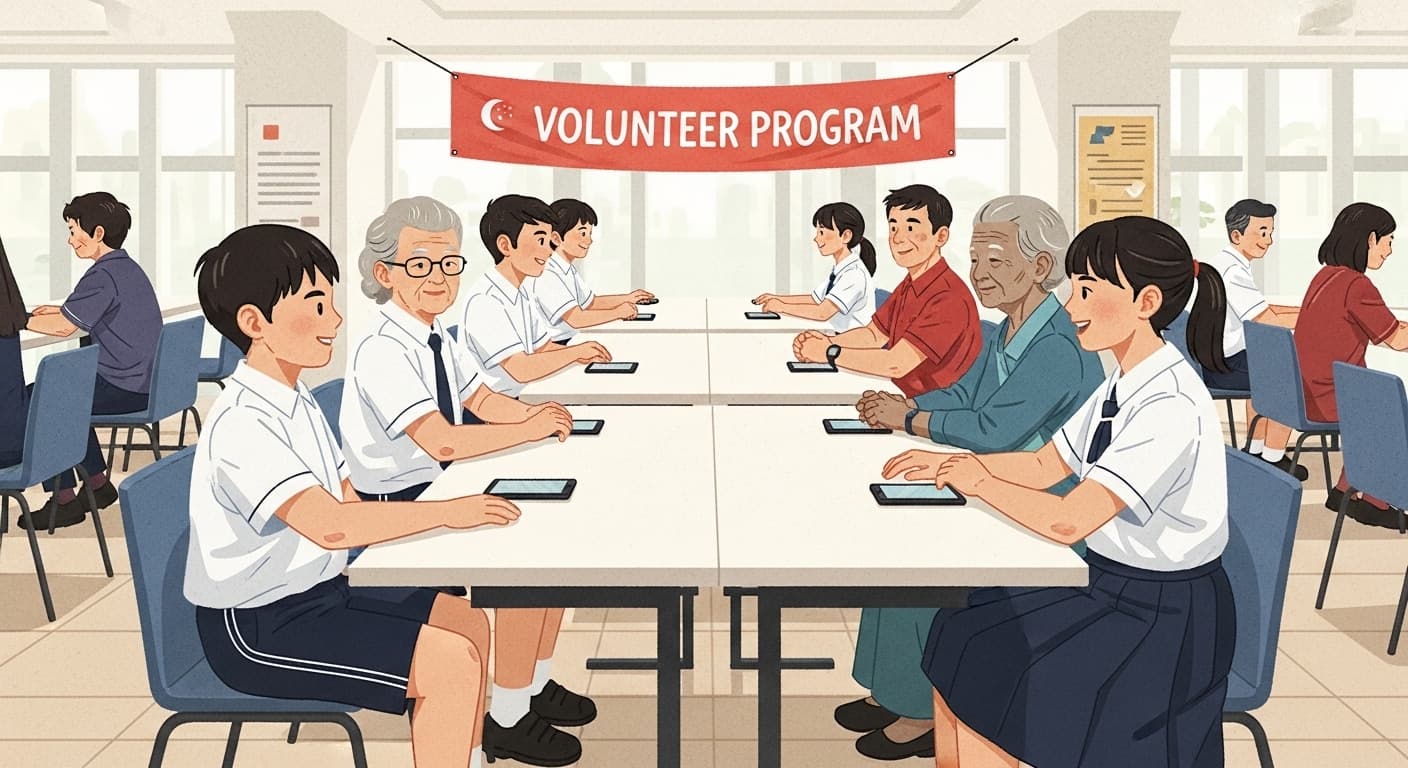
Volunteer Work
义工活动
Volunteer topics reward students who name what they actually did and how it FELT — not 义工很有意义 (volunteering is meaningful).