PSLE 华文 Oral · Category
Health & Lifestyle
健康生活
Health stimuli are easy to fake and hard to master. Examiners hear when a student is reciting from a textbook (我每天运动一小时 — I exercise an hour a day). They'll probe until the answer collapses. Honesty plus one real habit beats a polished lie every time.
Why this category matters
Healthy-lifestyle topics anchor 早睡早起, 挑食, and 多运动 — all classic 你同意吗 launchpads. The Q3 trade-off (学生应不应该完全不吃零食? — Should students avoid snacks completely?) rewards balanced reasoning over moralising.
Topics in this category

Healthy Lifestyle
健康生活
A boy who can't run one lap learns to love exercise. Q3 always probes 学生现在缺少运动吗? — defend a side and name your own habit.
Practise this topic →
The Picky Eater
挑食的孩子
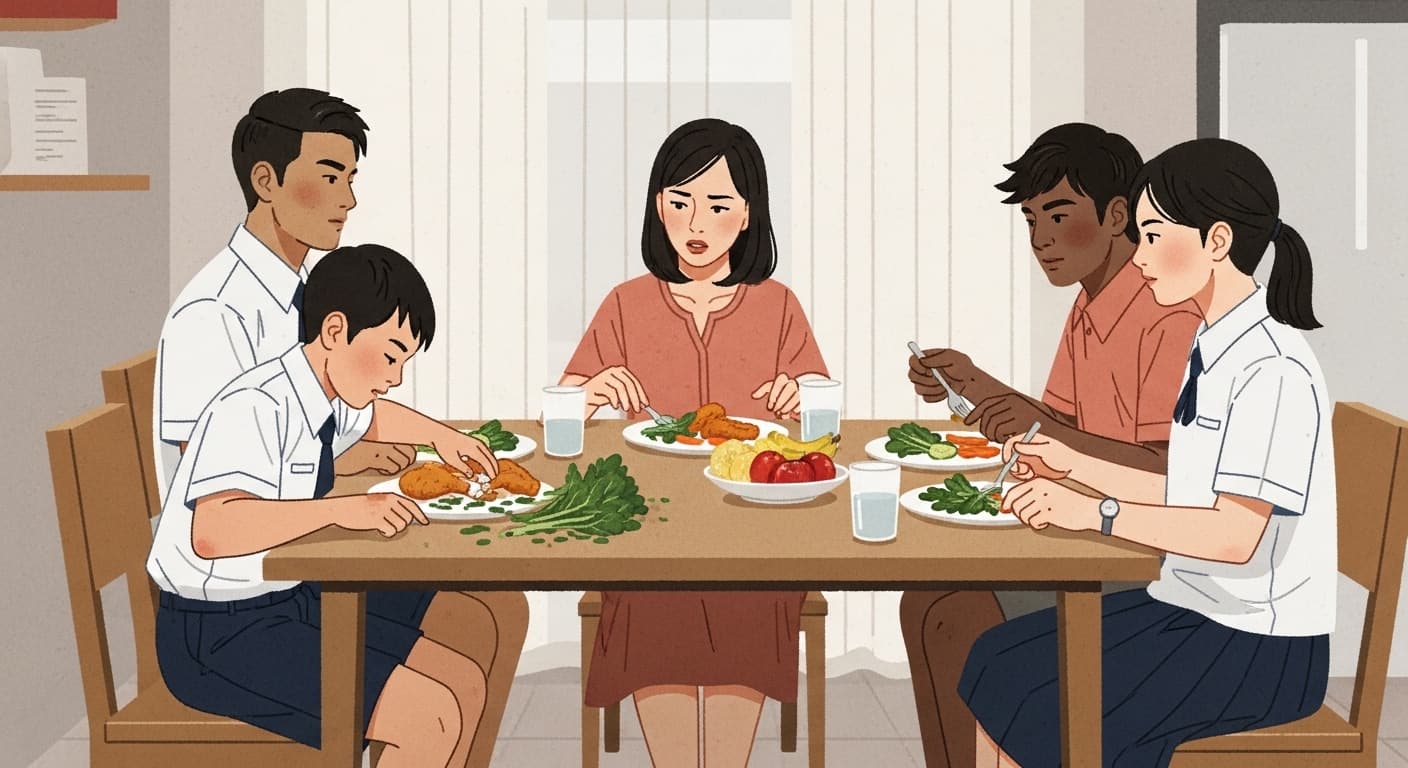
Picky-eater topics test honesty. Most students ARE picky. Admit one thing you don't eat and explain how you handle it.
Practise this topic →
Early to Bed, Early to Rise
早睡早起
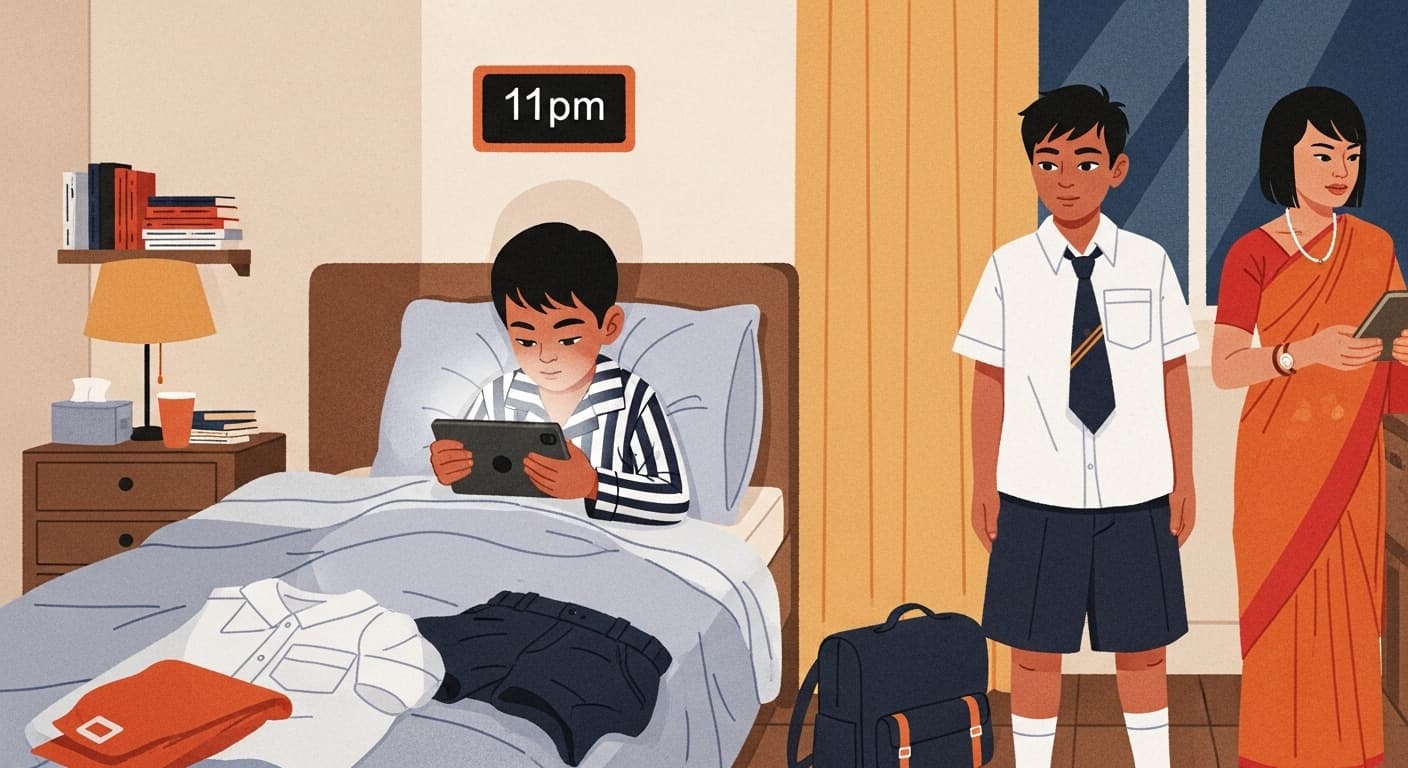
早睡早起身体好 repeated three ways won't score. Name your actual bedtime, an actual reason it's hard, and what helps.
Practise this topic →
Vocabulary bank for this category
- 健康jiànkāng— health / healthy
健康比什么都重要。
Health is more important than anything.
- 营养yíngyǎng— nutrition
蔬菜里有很多营养。
Vegetables contain a lot of nutrition.
- 均衡jūnhéng— balanced
饮食要均衡。
We should eat a balanced diet.
- 习惯xíguàn— habit
早睡是好习惯。
Sleeping early is a good habit.
- 运动yùndòng— exercise
我每周运动三次。
I exercise three times a week.
- 适量shìliàng— moderate amount
甜食要适量吃。
Sweets should be eaten in moderation.
Common mistakes to avoid
- Claiming you only eat healthy food. Examiners know primary-school students enjoy bubble tea and fried noodles — be honest about it.
- Treating 运动好 (exercise is good) as the answer. Explain why exercise helps YOU specifically, with one real moment.
- Forgetting the 适度 (moderation) angle on Q3. The high-scoring answer balances both sides before landing.
For parents
At your next family meal, ask 「这道菜对身体好吗?为什么?」 (Is this dish good for the body? Why?). Cooking-table conversations rehearse the exact specificity Q3 wants.
Practise with an AI examiner
Practise any topic in this category with our AI 华文 examiner — free for the first 10 sessions.
Real PSLE 华文 oral conversation format: video stimulus, three examiner questions, instant scoring on the SEAB rubric, bilingual feedback for parents.
Start 10 free practice sessionsNo credit card · No time limit on the trial