What the examiner sees
Photograph description
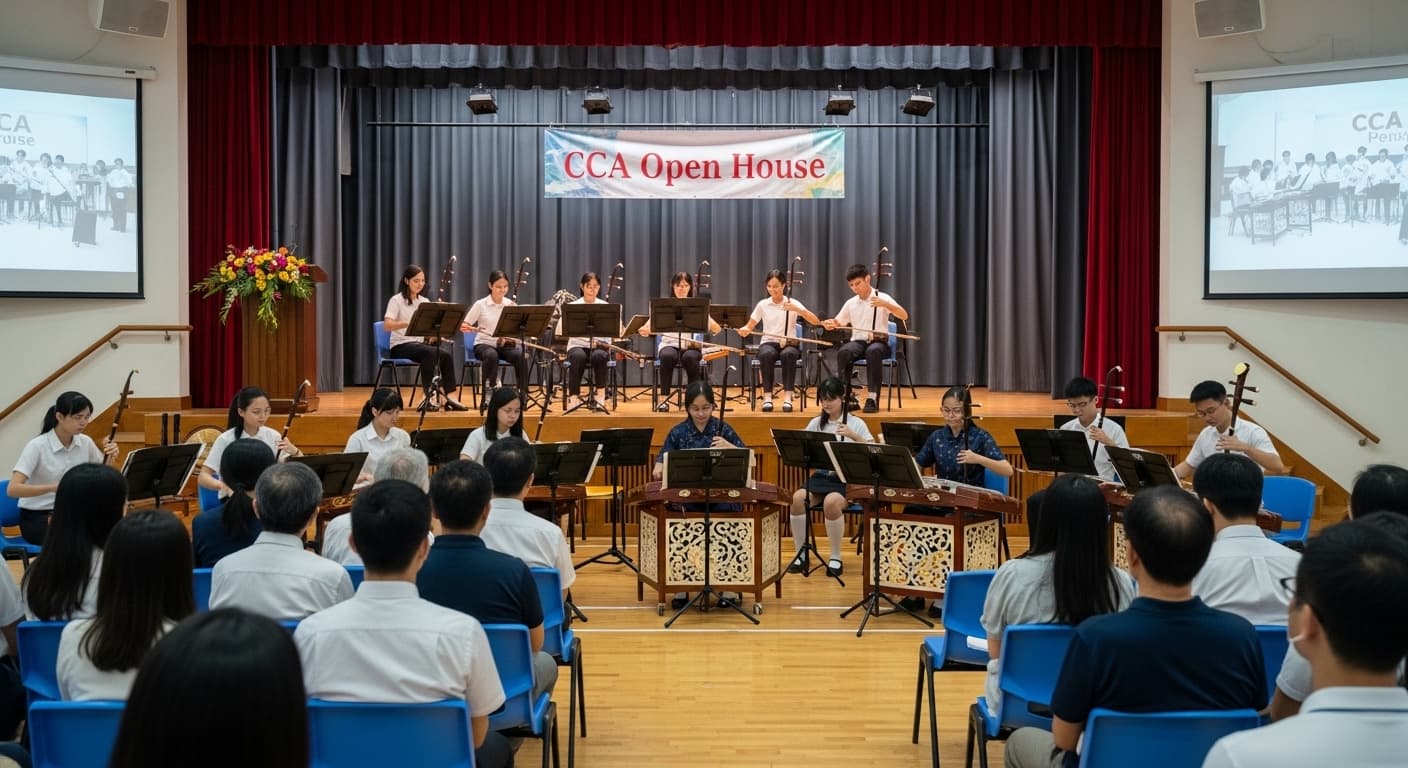
The photograph shows a school hall during a CCA showcase. A group of students is performing on stage with Chinese orchestra instruments such as the erhu, guzheng, and dizi. They are wearing matching outfits and concentrating on their music. In the audience, parents and students are watching with smiles. A banner behind the stage reads 'CCA Open House'.
Three questions the examiner might ask
What is happening in this photograph? How do you think the performers are feeling?
Are you involved in any music or arts CCA? Tell me about what you do and what you enjoy about it.
Some people say that music and art are less important than subjects like Maths and Science. Do you agree? Why or why not?
Q1 tests what you see in the photograph. Q2 tests a personal experience. Q3 tests your opinion — the hardest of the three since 2025.
A model opinion answer (P.E.E.L.)
Point
I believe Singapore's hawker culture is worth preserving because it brings people from all backgrounds together.
Explain
Hawker centres are one of the few places where you can find Chinese, Malay, and Indian food side by side at a price everyone can afford.
Example
For example, my family has had dinner every Friday at the same chicken rice stall for eight years, and my Malay neighbour eats at the stall next to us.
Link
So beyond the food, hawker centres are really social hubs — and that's why UNESCO recognised them as part of our heritage.
Swap in your own example — the structure stays the same. Examiners reward concrete detail over polished phrasing.
Common mistakes on this topic
- Saying 'culture is important' without explaining why. Examiners want specifics — a festival you joined, a dish you ate with family.
- Confusing 'culture' with 'country'. Singapore has many cultures; pick one and describe it.
- Skipping the personal experience question by giving a textbook answer. Share an actual memory.
Vocabulary that works for this topic
heritage— traditions and history passed down from the past
“Our hawker centres are an important part of Singapore's heritage.”
tradition— a custom followed by a group
“Reunion dinner is a tradition in my family.”
multicultural— made up of many cultures
“Singapore is a multicultural country.”
preserve— to keep something the way it is
“We should preserve our old shophouses.”
perform— to do something in front of an audience
“The students performed a traditional dance.”
celebrate— to mark a special event
“We celebrate Hari Raya with our Malay neighbours.”
For parents
Pull out an old family photo — a wedding, a festival, a grandparents' kampong photo — and ask your child to describe it in 60 seconds. That's exactly the muscle the SBC Q1 tests.
Practise this topic now
Run a full Stimulus-Based Conversation on “Music and the Arts” with an AI examiner.
Three real opinion questions, instant scoring on the 2025 SEAB rubric, and a parent-friendly breakdown of what to improve. Free for your first 10 sessions.
Practise this topic freeSign in takes 10 seconds · No credit card
More topics in Arts, Culture & Heritage
Celebrating Festivals
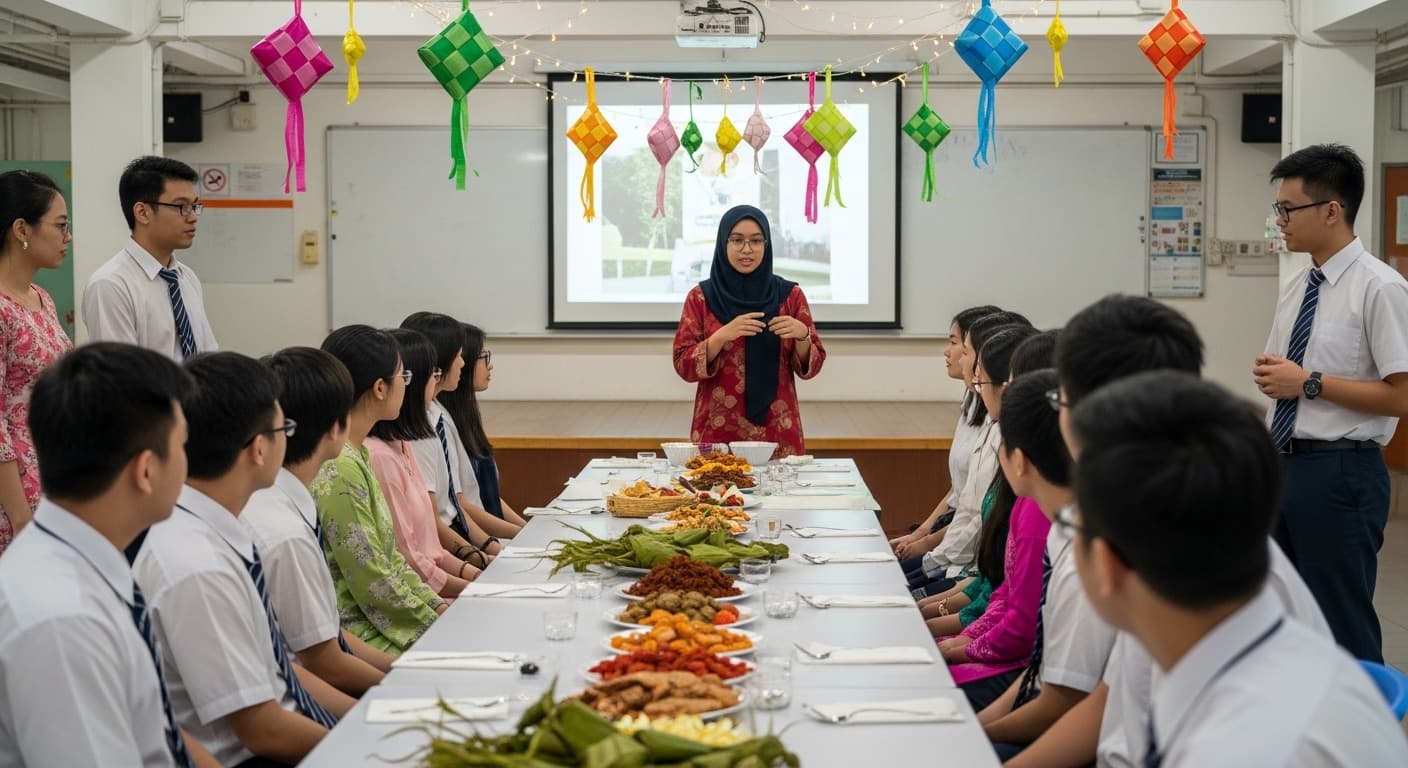
Festival SBCs are layered — you have to identify the festival, the cross-cultural detail, and the reason it matters. A personal Chinese New Year or Hari Raya memory anchors all three.
Our Singapore Heritage
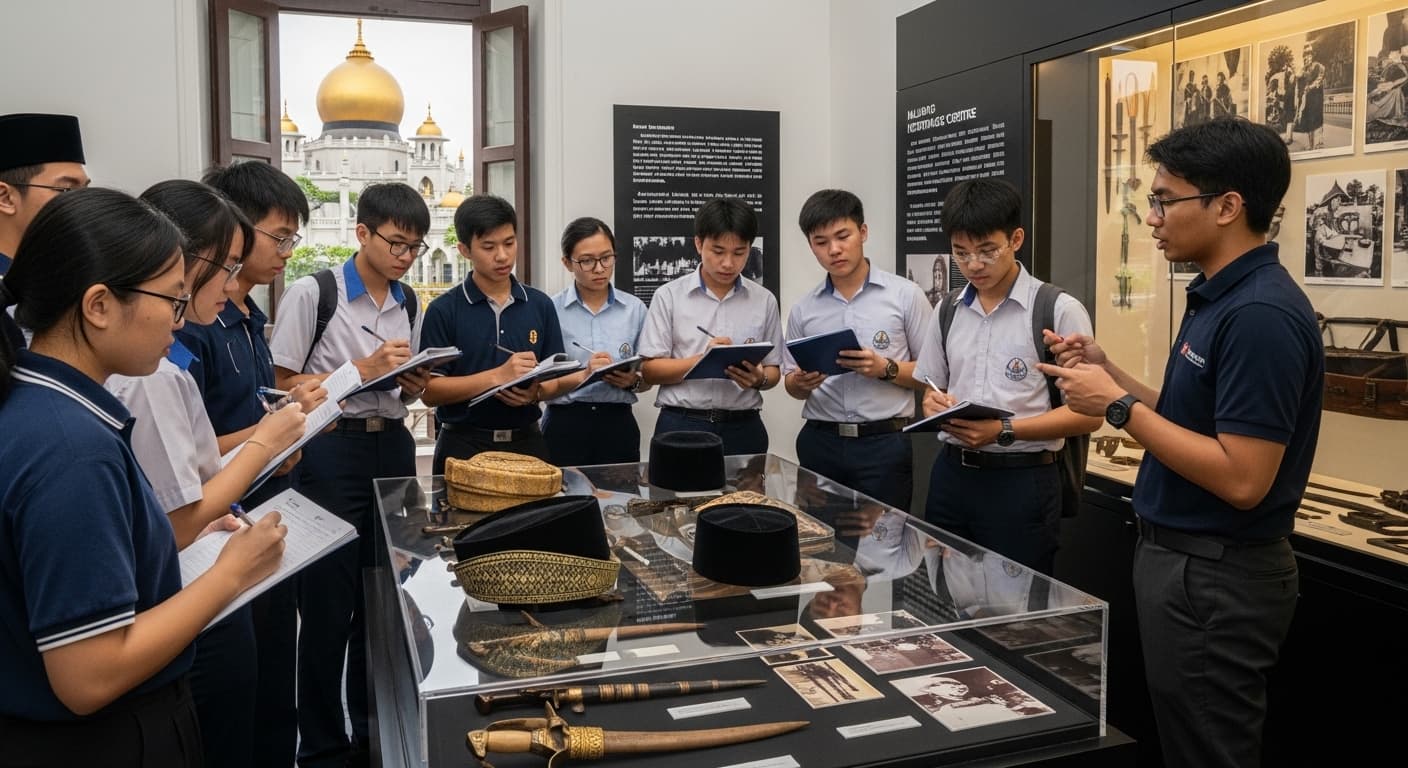
Heritage SBCs favour students who can name a specific place in Singapore — Kampong Glam, Tiong Bahru, the Malay Heritage Centre — and tie it to a family memory.
Hawker Culture
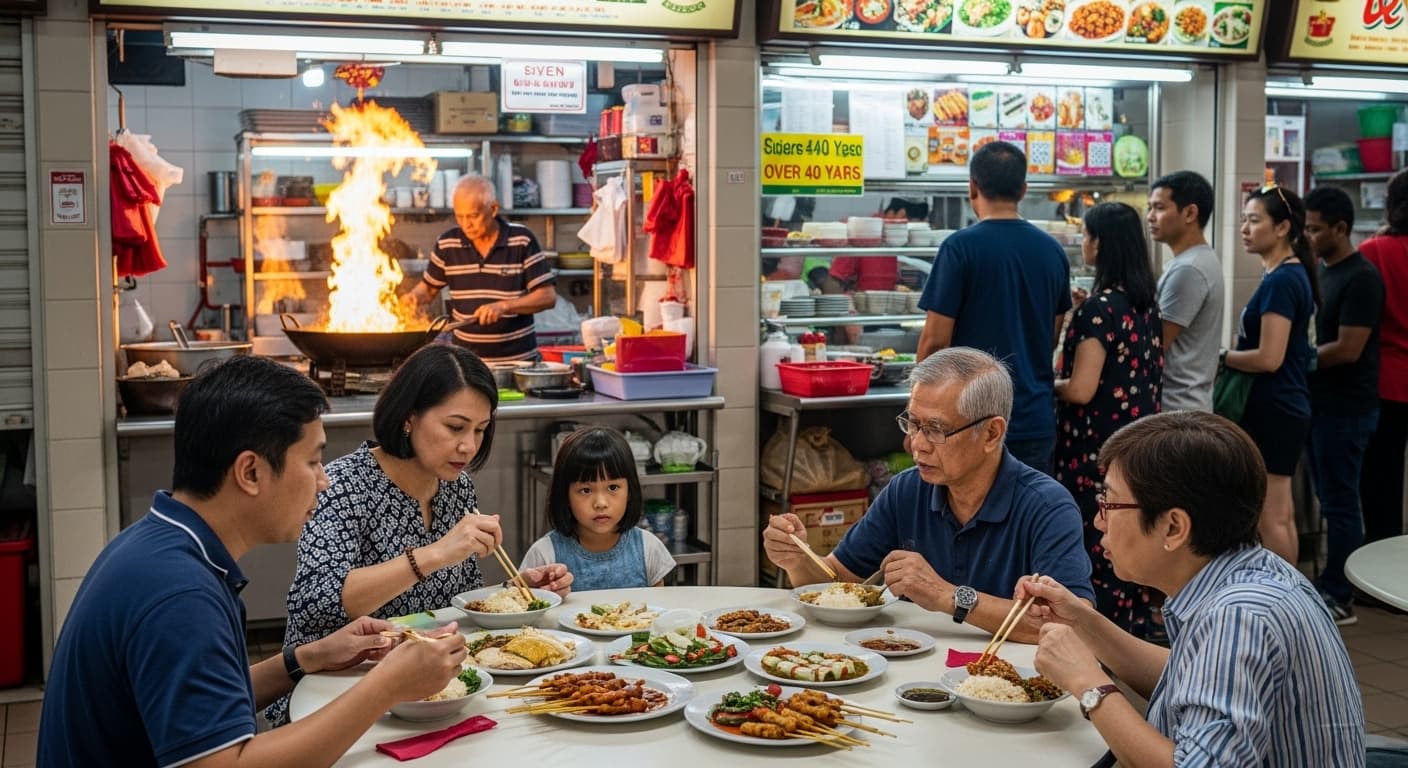
Hawker-culture is an easy topic to fake and a hard one to master. The score comes from one specific stall, one specific dish, one specific reason your family keeps going back.