What the examiner sees
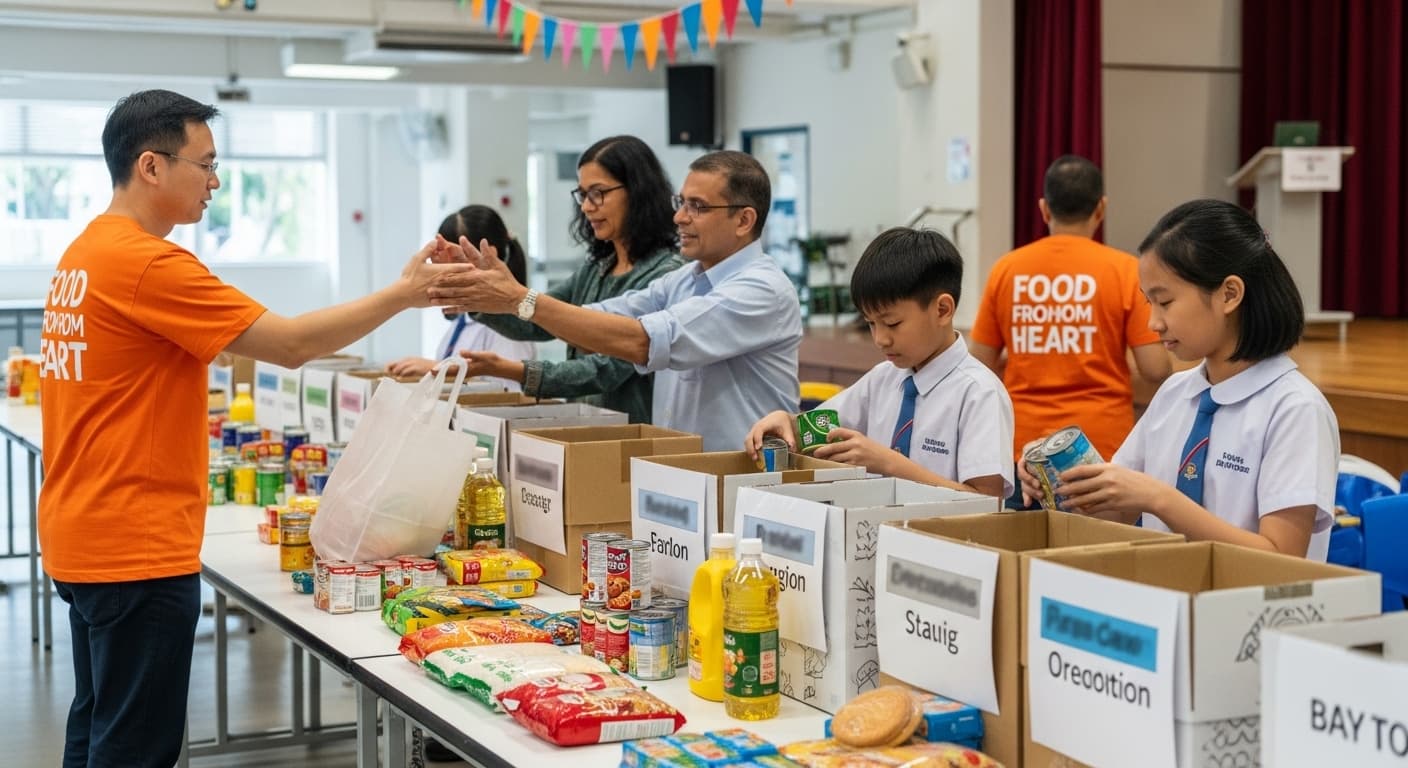
Photograph description
The photograph shows a Singapore primary school hall during a food drive. A row of tables is covered in donations — rice packets, canned food, biscuits, and cooking oil. Two students are carefully sorting the items into labelled boxes for different community organisations. A volunteer in an orange Food from the Heart t-shirt is thanking a parent who has just brought in another bag of donations. A cheerful banner hangs above.
Three questions the examiner might ask
What is happening in this photograph? How do you think the volunteer and the student feel?
Have you ever donated something — food, clothes, toys — to help others? Tell me about it.
Do you think schools should organise more community drives like this? Why or why not?
Q1 tests what you see in the photograph. Q2 tests a personal experience. Q3 tests your opinion — the hardest of the three since 2025.
A model opinion answer (P.E.E.L.)
Point
I strongly agree that students should take part in community service.
Explain
Helping others teaches us skills and empathy that we can't get from textbooks.
Example
Last year, my CCA visited a nursing home once a month. At first I was shy, but by the third visit I was chatting in Mandarin with one of the residents about her old kampong.
Link
That made me realise service is not just about giving — it's about listening, which is something every student should learn.
Swap in your own example — the structure stays the same. Examiners reward concrete detail over polished phrasing.
Common mistakes on this topic
- Claiming to volunteer every weekend when you don't. Examiners can spot exaggeration and will ask follow-ups.
- Saying 'It's good to help' three different ways. Pick one clear point and back it with a real example.
- Forgetting to mention how the person being helped felt. That's usually Q1.
Vocabulary that works for this topic
volunteer— to offer to help without being paid
“I volunteered at the food bank last weekend.”
grateful— feeling thankful
“The elderly residents were grateful for our help.”
contribute— to give or do something to help
“Every small action contributes to the community.”
initiative— taking action without being told
“She showed great initiative by organising the cleanup.”
generous— willing to give time or help
“My neighbours are generous with their time.”
support— to help someone
“We should support each other in difficult times.”
For parents
If your child hasn't done formal volunteering, any act of helping counts — carrying groceries for a neighbour, tutoring a younger sibling, clearing the hawker tray. Build the answer around one real story.
Practise this topic now
Run a full Stimulus-Based Conversation on “Food Donation Drive” with an AI examiner.
Three real opinion questions, instant scoring on the 2025 SEAB rubric, and a parent-friendly breakdown of what to improve. Free for your first 10 sessions.
Practise this topic freeSign in takes 10 seconds · No credit card
More topics in Community & Social Responsibility
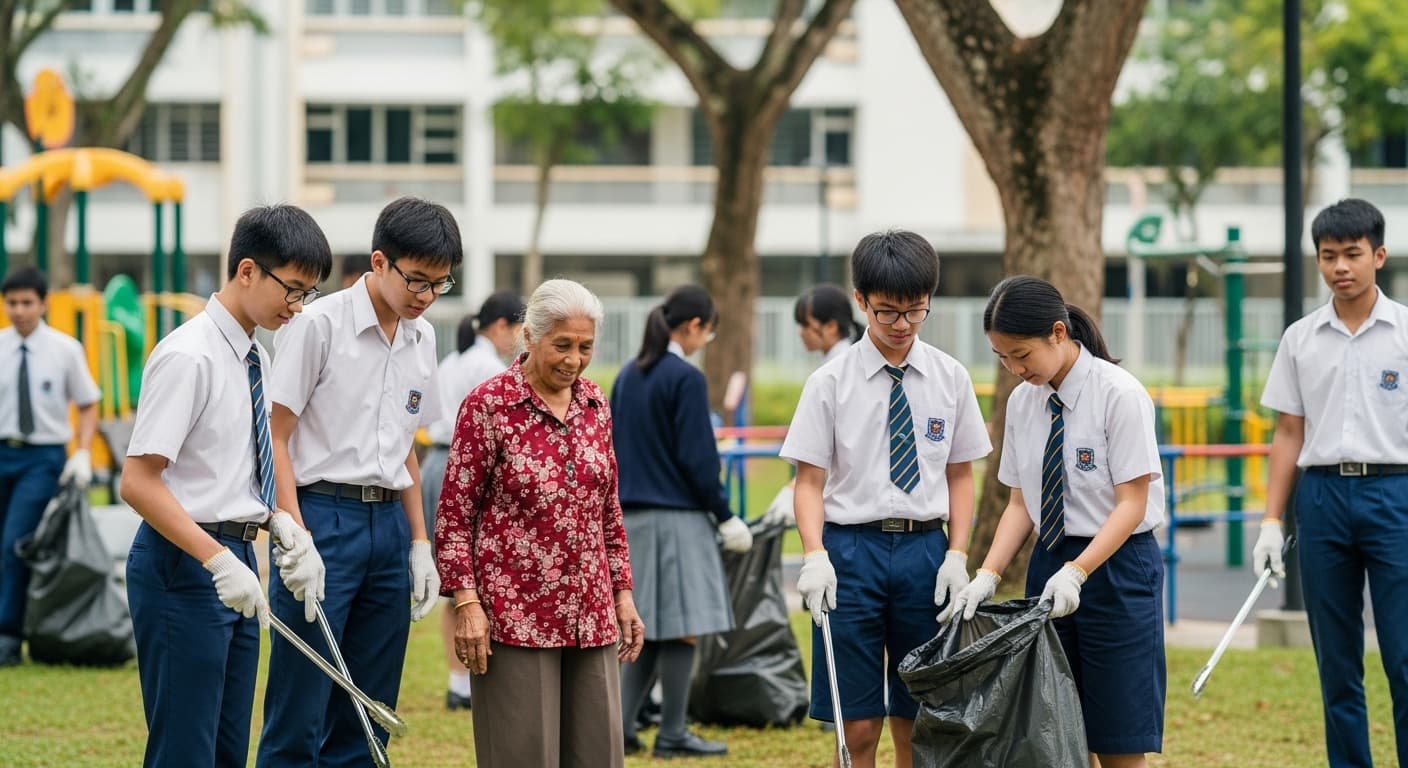
Helping in the Community
Community-service stimuli appear in most PSLE cycles. The high-scoring answer names how the person being helped felt — not just what the volunteers did.
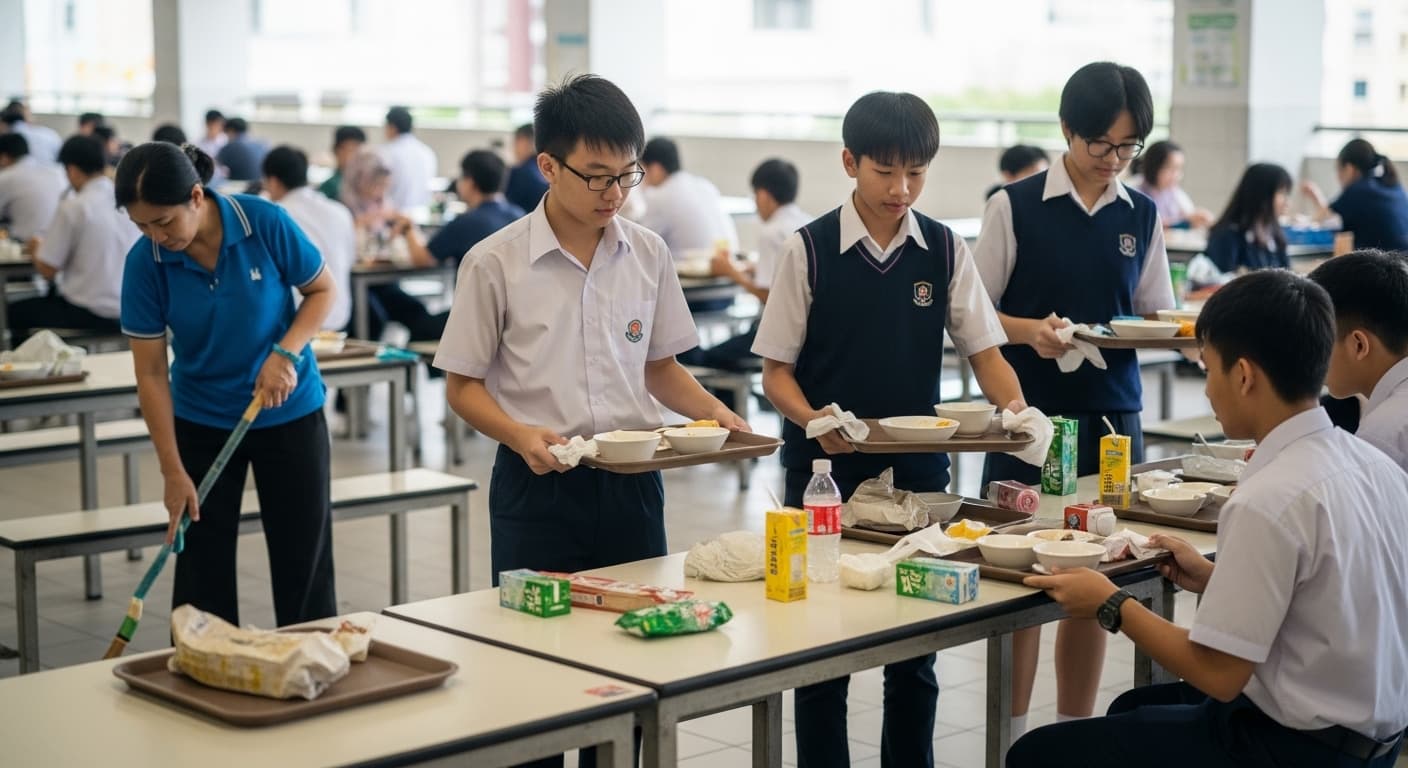
Keeping Our School Clean
The 'students should clean up' Q3 is a classic trap. Agreeing is fine — but the score comes from naming what your class actually does, not what it should do.
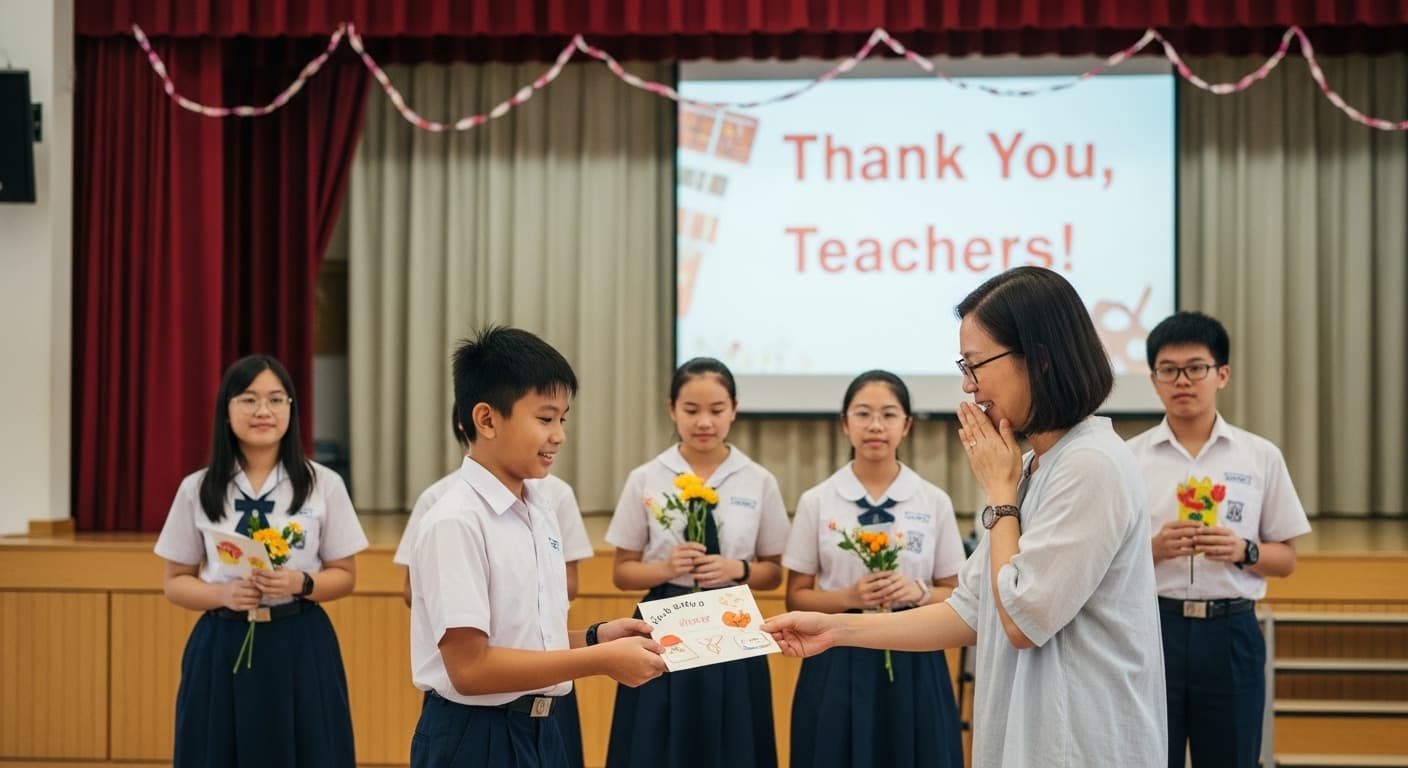
Showing Gratitude
Gratitude SBCs are often easier than they look. The danger is listing three people you're grateful to — pick one, tell one story, explain why that gratitude mattered.