What the examiner sees
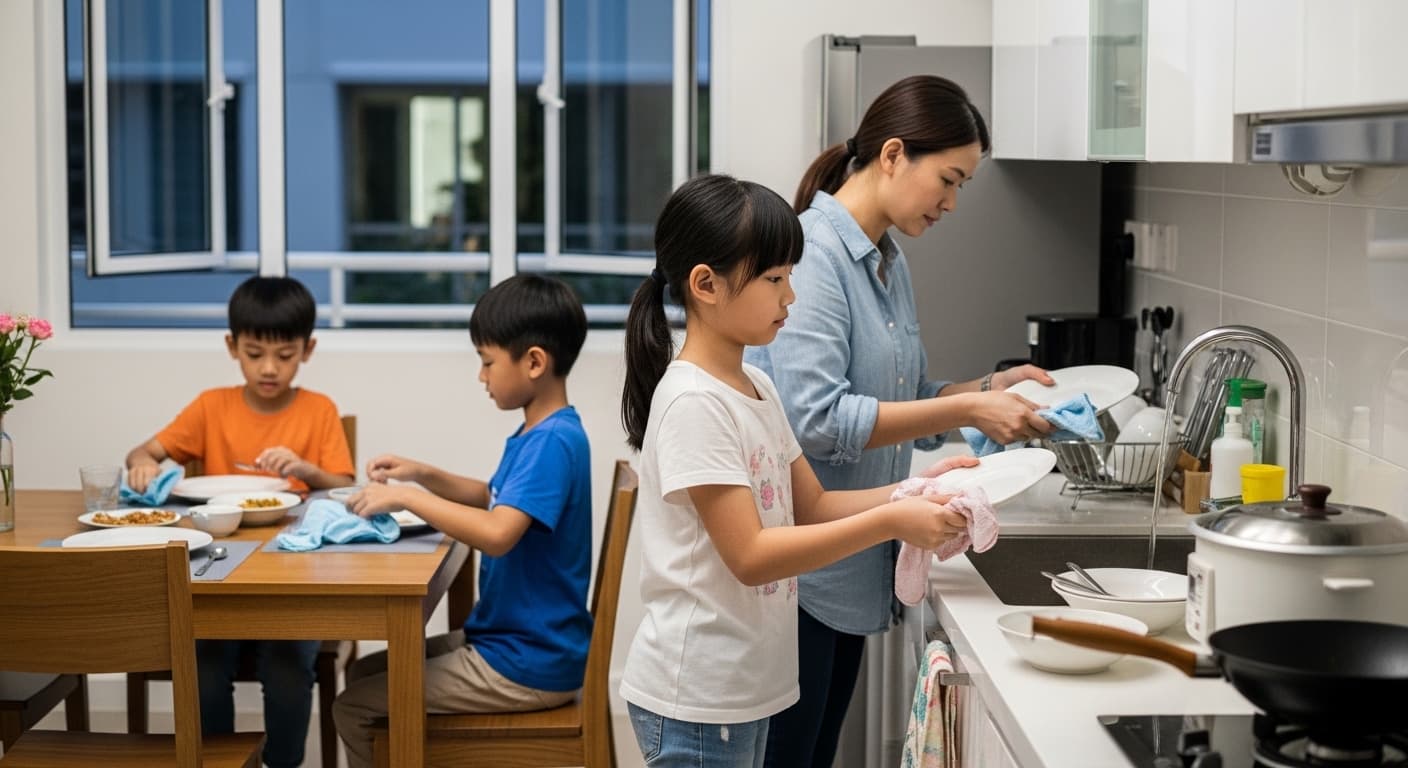
Photograph description
The photograph shows a Singapore HDB kitchen at dinner time. A primary-school-aged girl in home clothes is helping her mother wash dishes — the girl is drying plates with a clean cloth while her mother rinses them under the tap. On the dining table behind them, her younger brother is clearing up leftover food and wiping down the table. A rice cooker, wok, and a few empty dishes from dinner sit on the counter.
Three questions the examiner might ask
What are the children in the photograph doing? How do you think the mother feels?
What household chores do you help with at home? Tell me about one of them.
Some families do not ask children to help with chores. Do you think children should help at home? Why?
Q1 tests what you see in the photograph. Q2 tests a personal experience. Q3 tests your opinion — the hardest of the three since 2025.
A model opinion answer (P.E.E.L.)
Point
I think spending quality time with family is more important than doing many activities.
Explain
Quality is about how present we are, not how packed the schedule is.
Example
For example, on Sundays my family just has breakfast together at the kopitiam below our block. We don't do much else, but that hour is when I tell my parents about my week.
Link
Without that routine, we'd probably go days without a real conversation — which is why I value the quality over the quantity.
Swap in your own example — the structure stays the same. Examiners reward concrete detail over polished phrasing.
Common mistakes on this topic
- Talking about family 'in general' instead of your family. The point of Q2 is your experience.
- Listing every family member in Q1. Focus on two people and what they're doing in the photograph.
- Saying 'my family is perfect'. It sounds rehearsed. Real details — even small friction — are more believable.
Vocabulary that works for this topic
bond— a close connection
“I share a strong bond with my grandmother.”
quality time— time spent fully with someone
“We try to have quality time every weekend.”
tradition— something a family does regularly
“Sunday dim sum is our family tradition.”
appreciate— to value
“I appreciate my parents more now that I'm older.”
responsibility— a duty
“Feeding the dog is my responsibility.”
cherish— to hold dear
“I cherish the time I spend with my grandparents.”
For parents
Open the family photo album on your phone and ask your child to describe a random photo to you in 60 seconds. That's the most realistic Q1 drill there is.
Practise this topic now
Run a full Stimulus-Based Conversation on “Helping at Home” with an AI examiner.
Three real opinion questions, instant scoring on the 2025 SEAB rubric, and a parent-friendly breakdown of what to improve. Free for your first 10 sessions.
Practise this topic freeSign in takes 10 seconds · No credit card
More topics in Family & Home
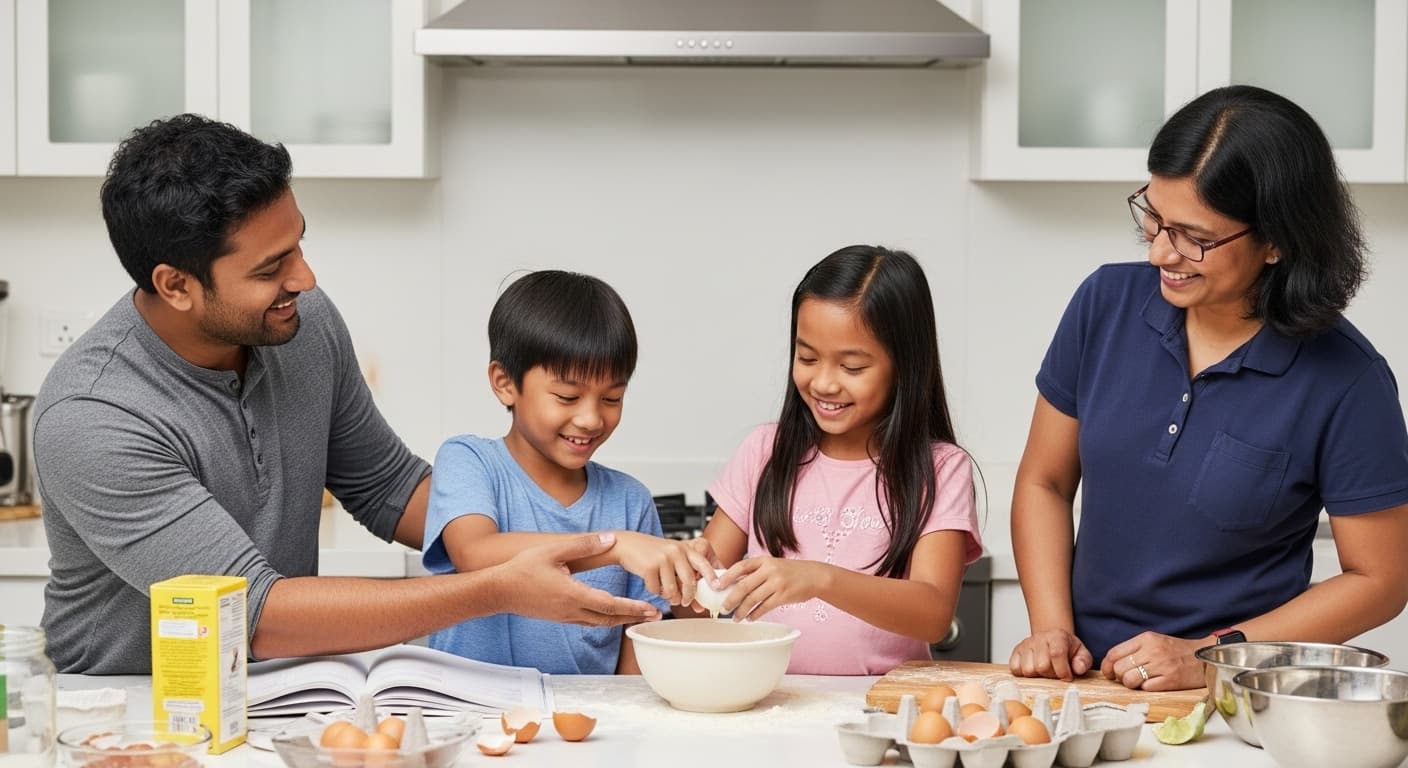
Family Bonding
Family SBCs reward specifics. Parents who win this topic coach a memorable family moment — a dish, a routine, a small disagreement — rather than a polished monologue.
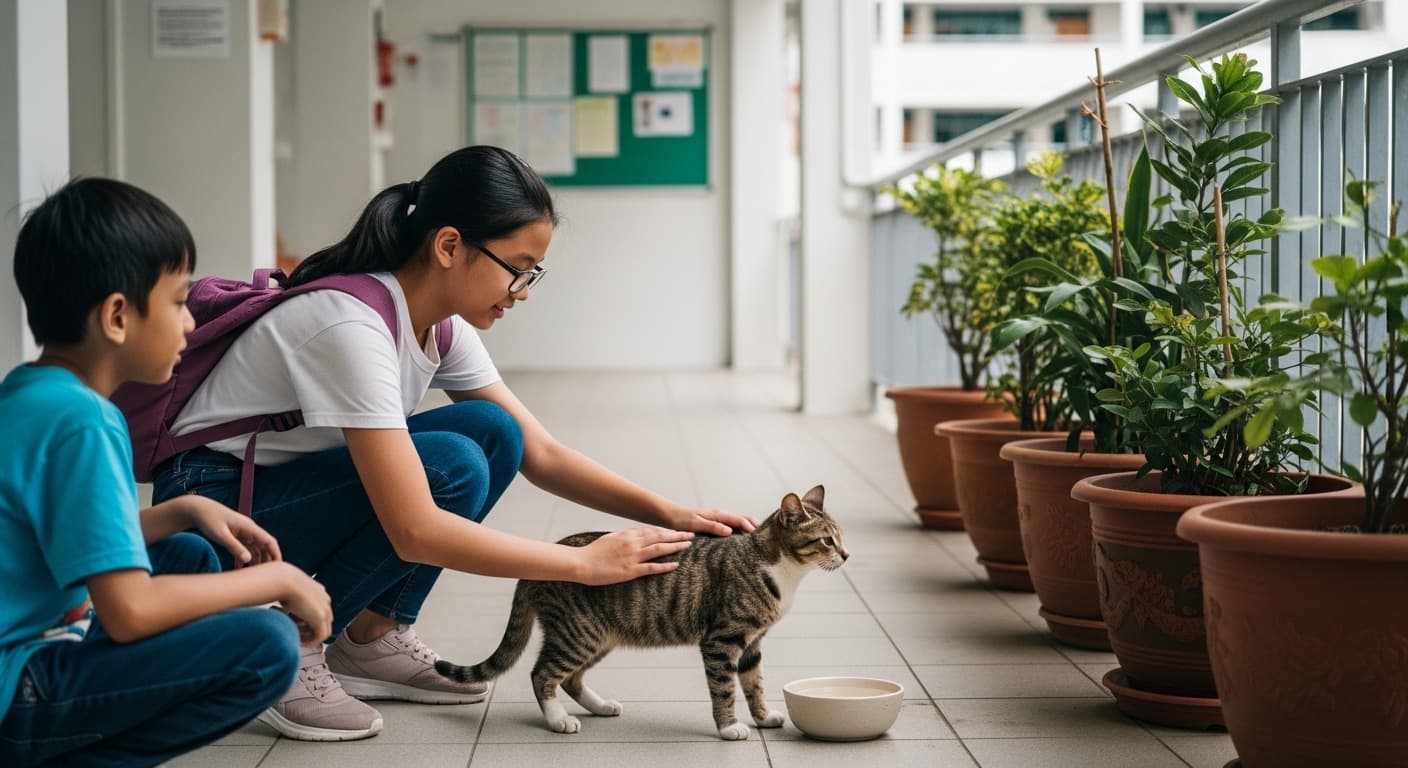
Caring for Pets
Pets and community animals let younger students relax. Lead with the small detail — the girl kneeling, the bowl of water — and let Q3 open up responsibility and care.
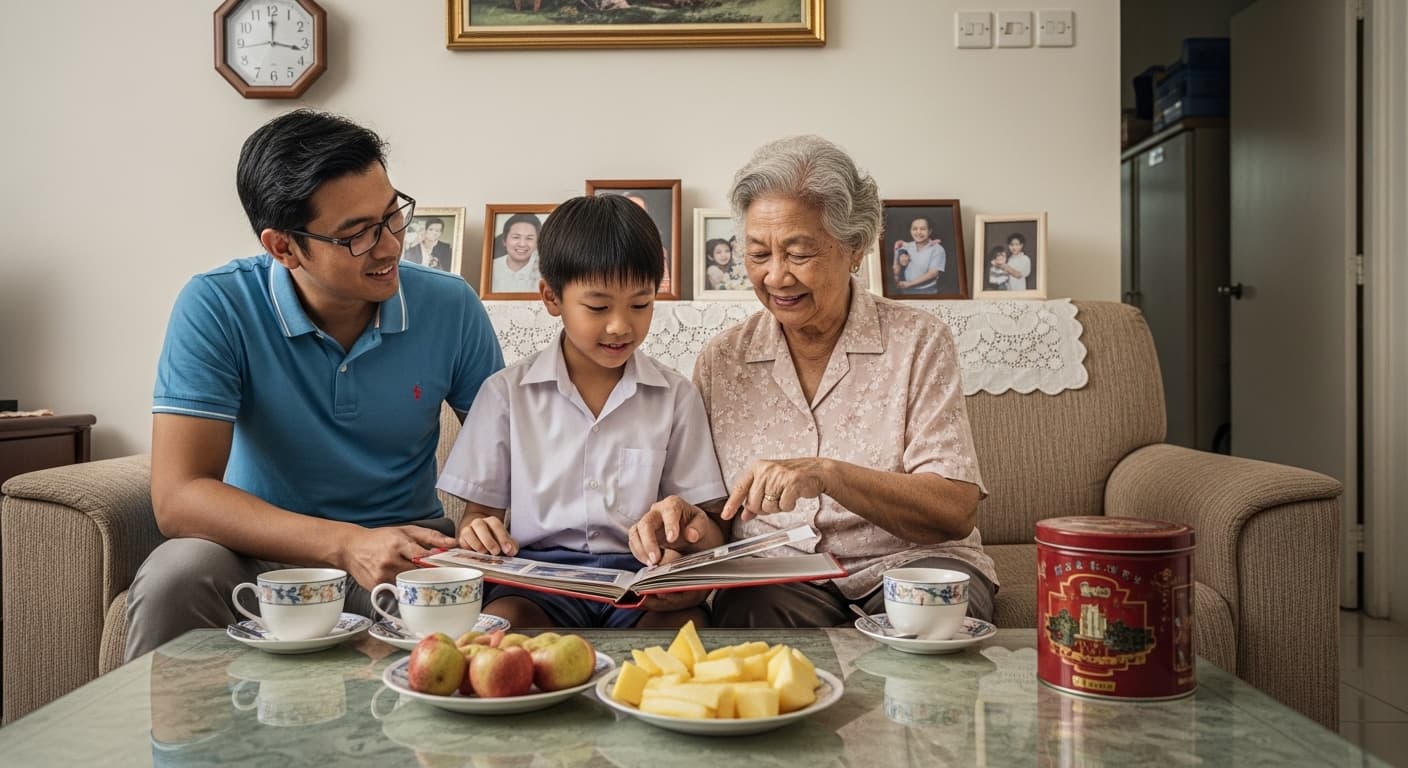
Visiting Grandparents
Grandparent SBCs reward warmth and specificity. Name the dish, the game, or the phrase your grandparent uses — that single detail outweighs any 'respect your elders' framing.