What the examiner sees
Photograph description
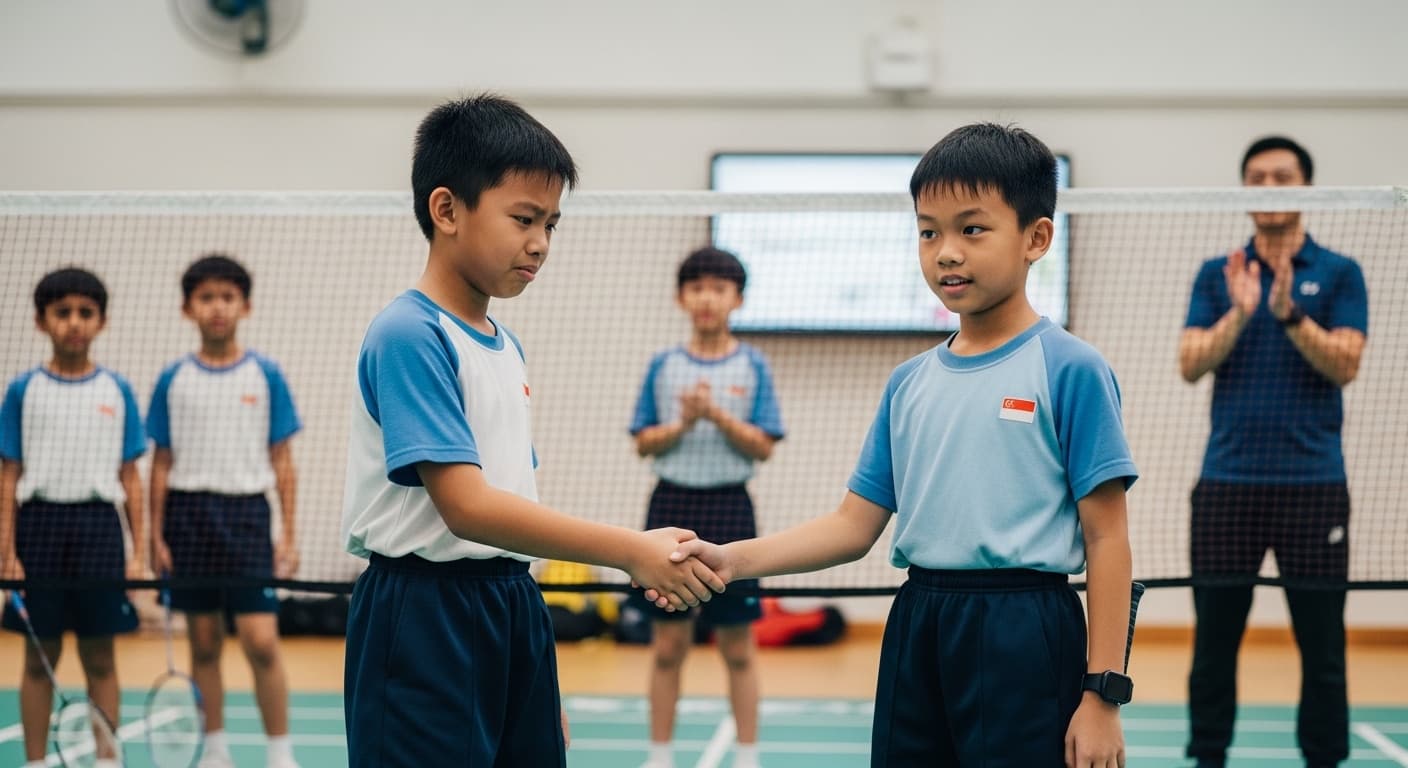
The photograph shows a school badminton court after a match. Two primary school students in school PE attire are standing at the net, shaking hands. The boy on the left has a disappointed expression — he has clearly just lost — but he is offering a firm handshake. The boy on the right looks both happy and slightly surprised at his win. In the background, teammates are watching and a coach is clapping.
Three questions the examiner might ask
What is happening in this photograph? How do you think each boy is feeling?
Tell me about a time you lost at something. What did you do afterwards?
Do you think losing can be more useful than winning sometimes? Why or why not?
Q1 tests what you see in the photograph. Q2 tests a personal experience. Q3 tests your opinion — the hardest of the three since 2025.
A model opinion answer (P.E.E.L.)
Point
I don't think schools should cut sports time to focus on studies.
Explain
Sports train habits — discipline, resilience, teamwork — that help students do better in academic work too.
Example
Before I joined the swimming team, I used to give up on hard Maths problems. After a year of 6am training, I found myself sticking with problems for much longer. My grades actually improved.
Link
So sports aren't time taken away from studies — for many students, they're the thing that makes studying work.
Swap in your own example — the structure stays the same. Examiners reward concrete detail over polished phrasing.
Common mistakes on this topic
- Describing the sport instead of the picture. Q1 asks what's happening in the photo — a specific person, not a general sport.
- Claiming you 'never give up' without a concrete story. Share the moment you almost gave up but didn't.
- Saying sports and studies are 'equally important'. That's a non-answer — pick a side or explain your balance.
Vocabulary that works for this topic
perseverance— keeping going despite difficulty
“His perseverance paid off.”
competitive— wanting to win
“She's very competitive in badminton.”
teamwork— working well with others
“Teamwork is the heart of any sport.”
encourage— to give someone confidence
“My teammates always encourage me.”
achievement— something completed successfully
“Finishing the race was my biggest achievement.”
discipline— self-control
“Daily training requires discipline.”
For parents
If your child isn't in a sports CCA, any physical challenge counts — learning to cycle, running the 2.4km, a school carnival game. Build the answer around one moment where they almost quit and didn't.
Practise this topic now
Run a full Stimulus-Based Conversation on “Losing a Match” with an AI examiner.
Three real opinion questions, instant scoring on the 2025 SEAB rubric, and a parent-friendly breakdown of what to improve. Free for your first 10 sessions.
Practise this topic freeSign in takes 10 seconds · No credit card
More topics in Sports & Recreation
Sports Day
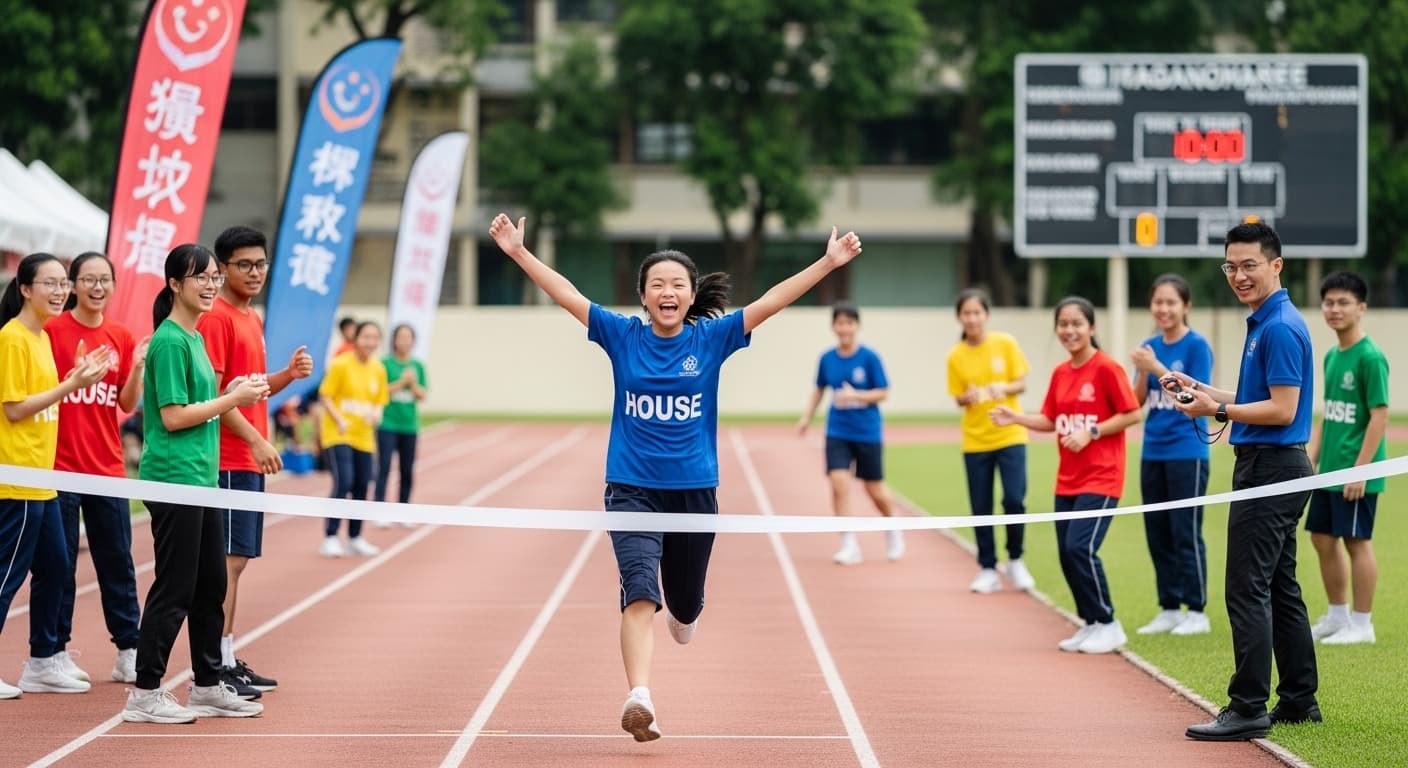
Sports Day photographs test emotion and inference, not sports knowledge. The trick is describing how the runner feels — tired, determined, proud — rather than naming the event.
Learning to Cycle
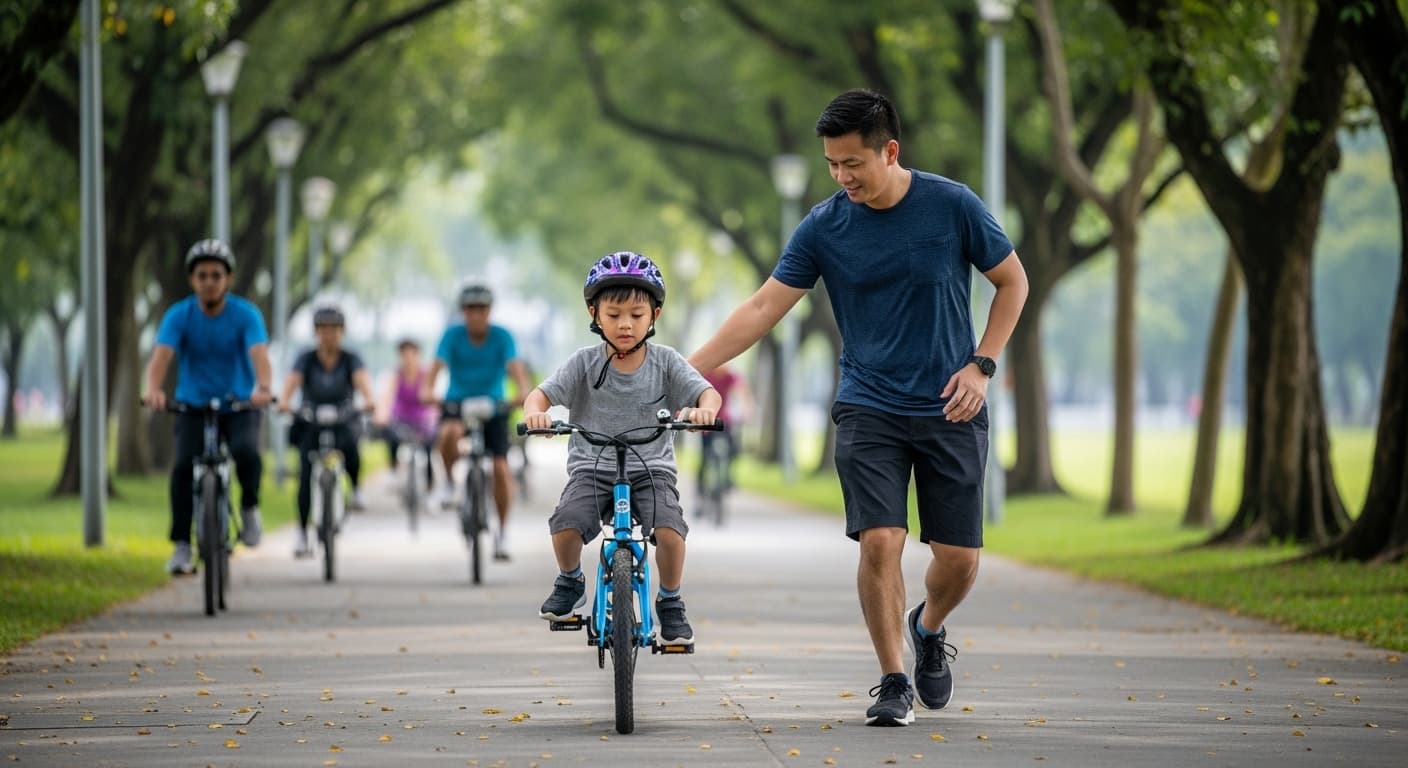
Cycling photographs test emotion and relationship. The high-scoring Q1 names how the child looks AND how the parent looks — the pair matters, not the bike.
Trying a New Sport
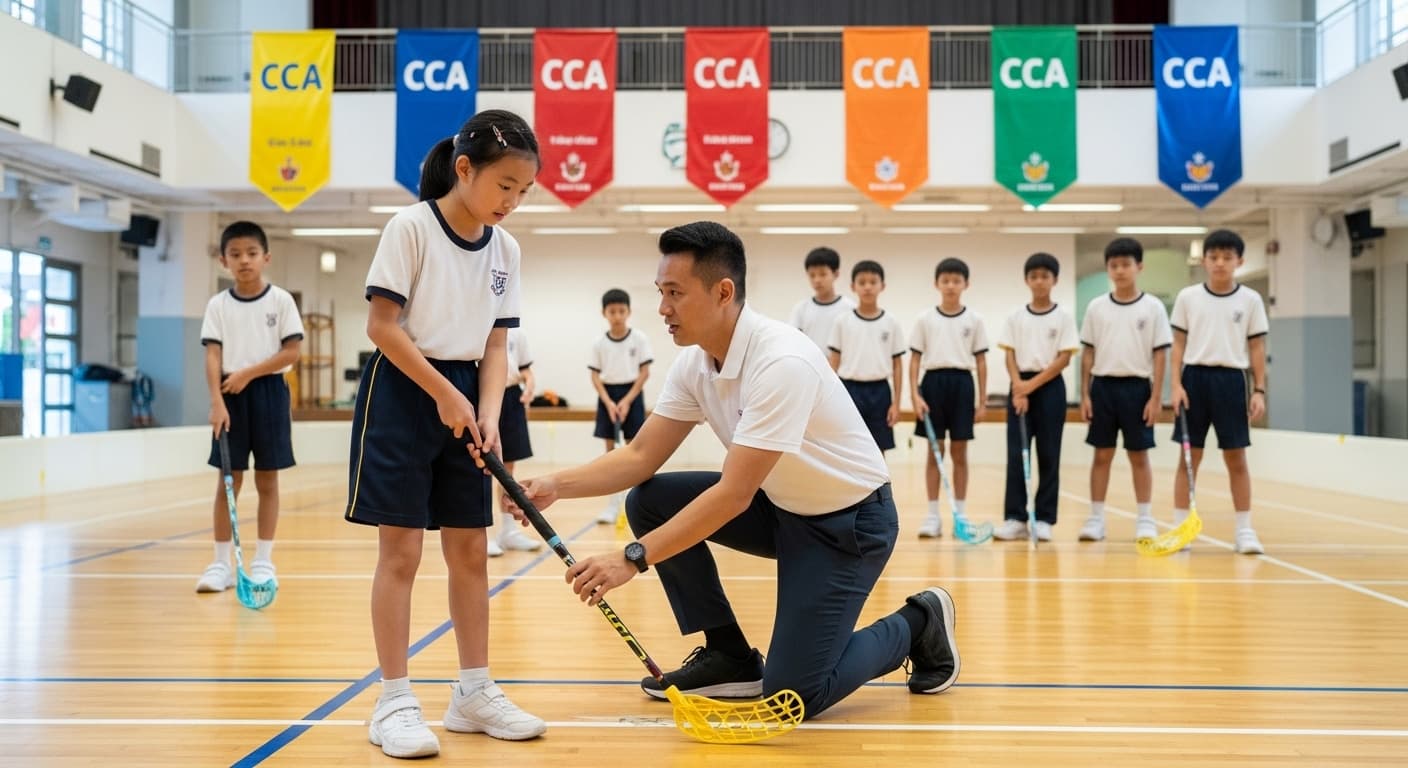
New-CCA photographs test inference — the coach's posture, the nervous grip. A Q2 story about a first day that ended well (or badly) is always more memorable than a generic answer.