PSLE English Oral · Category
Exam Favourites
These themes turn up repeatedly in PSLE oral exams. If your child can handle the photograph-based SBC on any of the topics below confidently, they will walk into the exam with fewer surprises.
Why this category matters
SEAB pulls from a predictable pool of socio-moralistic themes — community responsibility, family, healthy choices, and technology. At least one of the two exam days almost always mirrors one of these. Drilling them is the highest-leverage preparation you can do.
Topics in this category
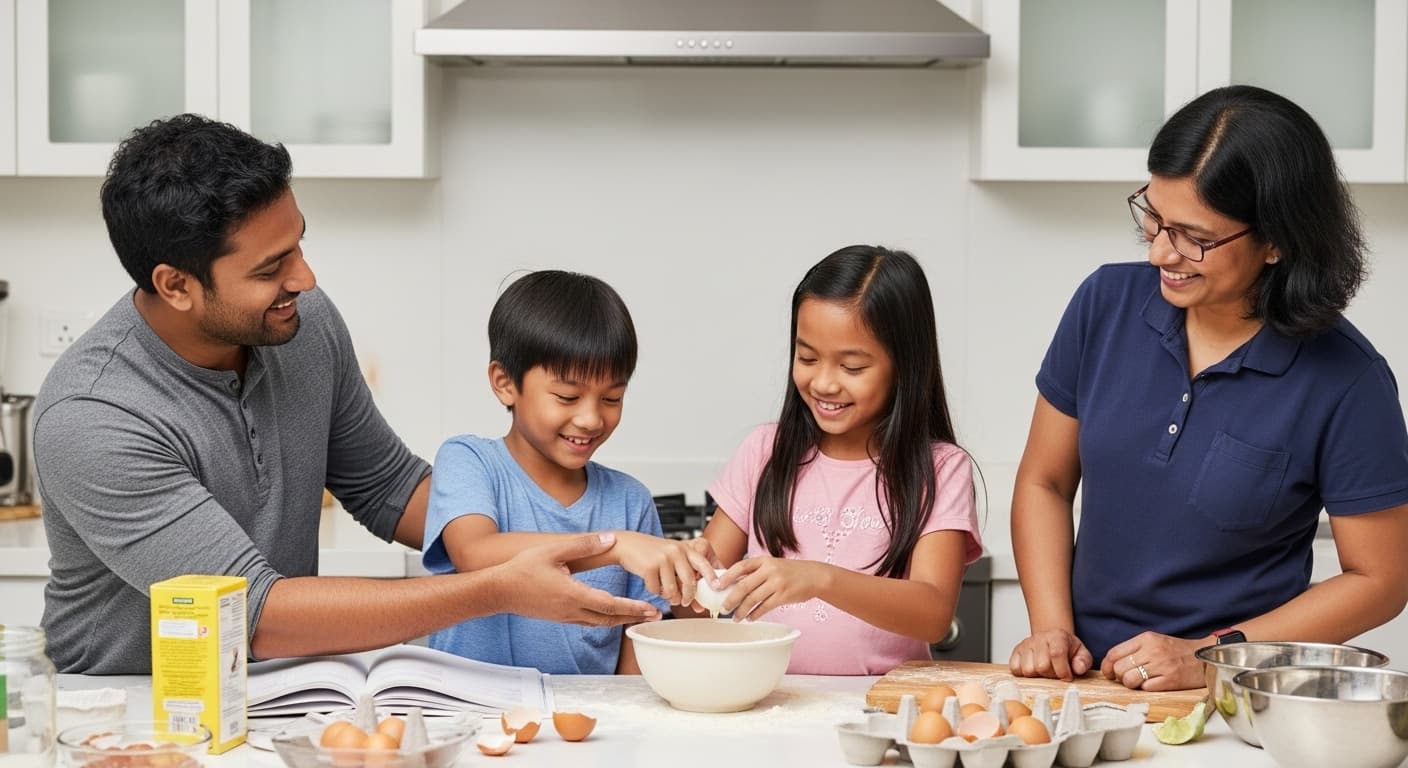
Family Bonding
Family SBCs reward specifics. Parents who win this topic coach a memorable family moment — a dish, a routine, a small disagreement — rather than a polished monologue.
Practise this topic →
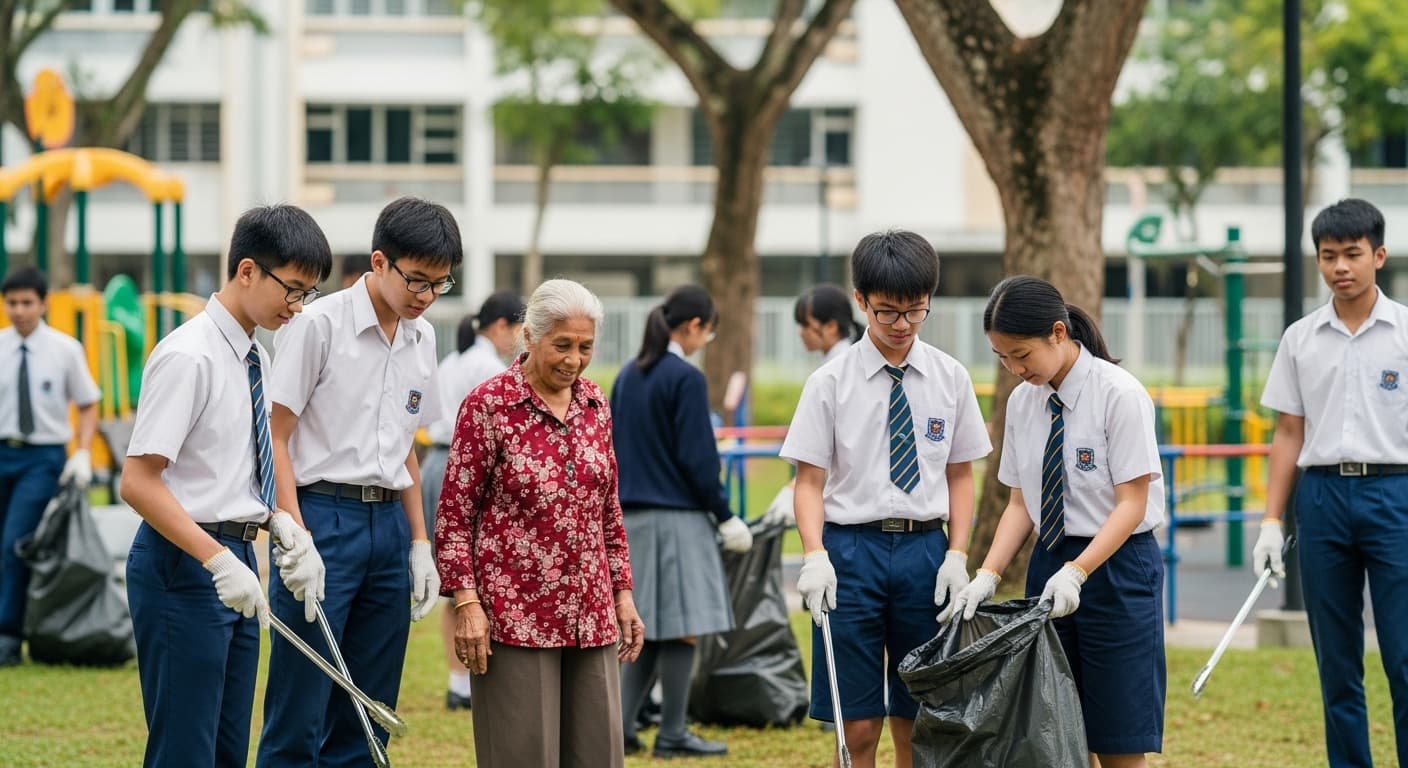
Helping in the Community
Community-service stimuli appear in most PSLE cycles. The high-scoring answer names how the person being helped felt — not just what the volunteers did.
Practise this topic →

Digital Devices
The highest-probability 2026 SBC. Most students say screens are bad — the high-scoring answer separates productive from unproductive screen time with a concrete family rule.
Practise this topic →

Caring for the Elderly
Elderly-care SBCs test values through inference. Start by naming the small, thoughtful gesture in the photo, then anchor the opinion answer in a real grandparent or neighbour.
Practise this topic →

Healthy Eating
Healthy-eating Q3 rewards honesty over virtue. Students who admit to enjoying bubble tea and hawker fried food — then talk about balance — score higher than students who pretend.
Practise this topic →

A Good Friend
Friendship SBCs let students bring a specific friend into the answer. A one-line story about a real friend who helped you scores higher than any vocabulary bank.
Practise this topic →

Never Give Up
The swim-race photograph is an inference exam in disguise. Describe the strain on the swimmer's face and the teammates' reaction, then tell a real story of almost giving up.
Practise this topic →

Protecting Our Environment
Environment Q3 often asks if one person makes a difference. Disagree politely, name the ripple effect in your own block or school, and refuse to flip when the examiner pushes.
Practise this topic →
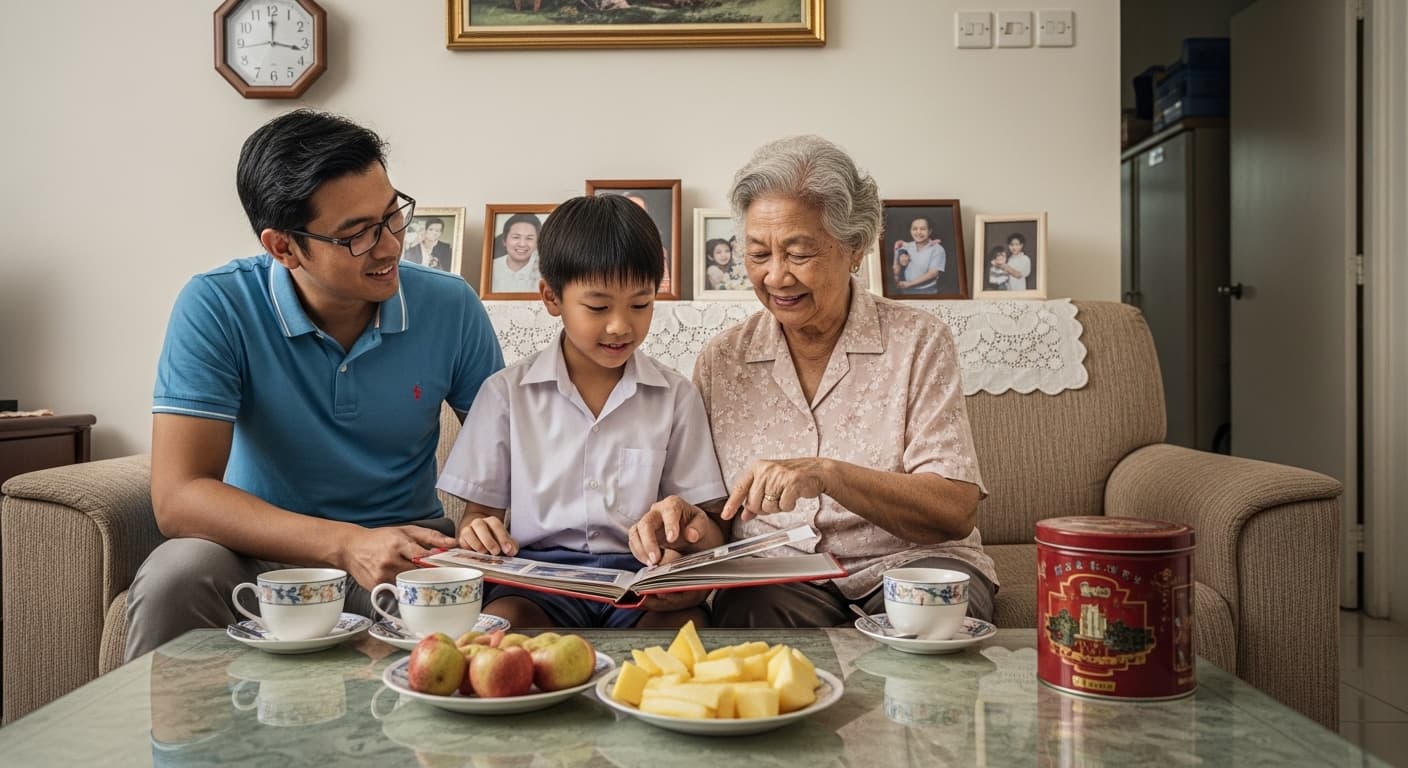
Visiting Grandparents
Grandparent SBCs reward warmth and specificity. Name the dish, the game, or the phrase your grandparent uses — that single detail outweighs any 'respect your elders' framing.
Practise this topic →

Getting Enough Sleep
Sleep-and-screens Q3 is a growing favourite — it's a real problem parents raised at SEAB consultations. Name the screen habit, the hour, and the fix, in that order.
Practise this topic →

Using AI to Learn
AI-in-learning Q3 asks students to draw the line between 'help' and 'cheat'. The answer that defines the line concretely — 'AI explains, I still write' — scores higher than one that dodges the tension.
Practise this topic →

Too Much Screen Time
Screen-time Q3 asks whether devices make children lonelier. A 'sometimes yes, sometimes no' answer works only if it names WHEN each is true — specificity wins.
Practise this topic →
Vocabulary bank for this category
responsibility— a duty someone is expected to do
“Taking care of my little sister is a big responsibility.”
community— a group of people living or working together
“Our HDB estate has a very close community.”
considerate— thinking about other people's feelings
“It was considerate of him to give up his seat.”
priority— something more important than other things
“Homework should be a priority on weekdays.”
in my opinion— phrase for sharing your view
“In my opinion, screen time should be limited.”
for example— phrase for giving a specific instance
“For example, my grandfather walks 30 minutes daily.”
on the other hand— phrase for presenting a contrast
“On the other hand, some students prefer studying alone.”
as a result— phrase for stating a consequence
“He practised daily. As a result, he passed easily.”
Common mistakes to avoid
- Memorising a full paragraph and trying to recite it — examiners can tell and will ask a follow-up you haven't prepared for.
- Jumping straight to an opinion without describing the photograph first. Q1 always starts with what is in the picture.
- Giving a one-line answer. Aim for 3–4 sentences: Point → Explain → Example → Link.
A model answer using P.E.E.L.
Point
In my opinion, young people today should take more responsibility for their community.
Explain
This is because we live in a small, shared space, so one person's actions affect many neighbours.
Example
For example, during the last school holidays, my class organised a block-wide recycling drive and collected over 200 kilograms of paper.
Link
As a result, the residents thanked us and even helped out on the second weekend — which shows that small actions can inspire others.
For parents
After every practice answer, ask three questions — 'Why?', 'Can you give an example?', and 'So what does that mean?' — in that order. It trains the P.E.E.L. structure without needing to coach content.
Practise with an AI examiner
Practise any topic in this category with our AI examiner — free for the first 10 sessions.
Full 2025 PSLE English Oral format: photograph-based SBC, three opinion questions, instant scoring on the real SEAB rubric.
Start 10 free practice sessionsNo credit card · No time limit on the trial