
What the examiner sees
Photograph description
The photograph shows a boy around 11 years old sitting on a sofa at home. He is playing a game on his tablet, wearing headphones. On the table next to him, there is an open textbook and an unfinished homework sheet. A clock on the wall shows 4:30 pm. His school bag is on the floor nearby.
Three questions the examiner might ask
What do you notice in this photograph? What do you think the boy should be doing?
How do you manage your time between homework and using devices? Tell me about your routine.
Do you think children your age spend too much time on digital devices? What would you suggest to help children use devices more wisely?
Q1 tests what you see in the photograph. Q2 tests a personal experience. Q3 tests your opinion — the hardest of the three since 2025.
A model opinion answer (P.E.E.L.)
Point
In my opinion, young people today should take more responsibility for their community.
Explain
This is because we live in a small, shared space, so one person's actions affect many neighbours.
Example
For example, during the last school holidays, my class organised a block-wide recycling drive and collected over 200 kilograms of paper.
Link
As a result, the residents thanked us and even helped out on the second weekend — which shows that small actions can inspire others.
Swap in your own example — the structure stays the same. Examiners reward concrete detail over polished phrasing.
Common mistakes on this topic
- Memorising a full paragraph and trying to recite it — examiners can tell and will ask a follow-up you haven't prepared for.
- Jumping straight to an opinion without describing the photograph first. Q1 always starts with what is in the picture.
- Giving a one-line answer. Aim for 3–4 sentences: Point → Explain → Example → Link.
Vocabulary that works for this topic
responsibility— a duty someone is expected to do
“Taking care of my little sister is a big responsibility.”
community— a group of people living or working together
“Our HDB estate has a very close community.”
considerate— thinking about other people's feelings
“It was considerate of him to give up his seat.”
priority— something more important than other things
“Homework should be a priority on weekdays.”
in my opinion— phrase for sharing your view
“In my opinion, screen time should be limited.”
for example— phrase for giving a specific instance
“For example, my grandfather walks 30 minutes daily.”
For parents
After every practice answer, ask three questions — 'Why?', 'Can you give an example?', and 'So what does that mean?' — in that order. It trains the P.E.E.L. structure without needing to coach content.
Practise this topic now
Run a full Stimulus-Based Conversation on “Digital Devices” with an AI examiner.
Three real opinion questions, instant scoring on the 2025 SEAB rubric, and a parent-friendly breakdown of what to improve. Free for your first 10 sessions.
Practise this topic freeSign in takes 10 seconds · No credit card
More topics in Exam Favourites
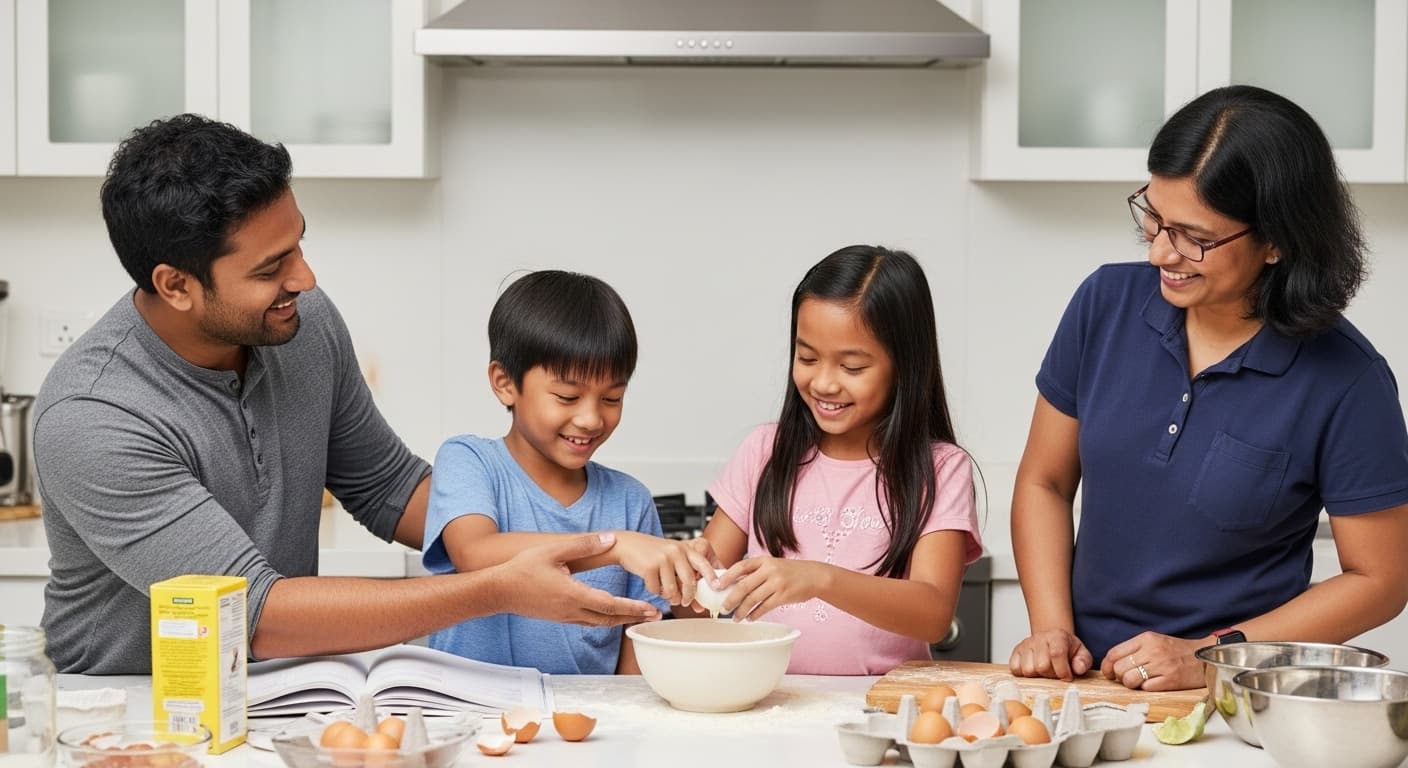
Family Bonding
Family SBCs reward specifics. Parents who win this topic coach a memorable family moment — a dish, a routine, a small disagreement — rather than a polished monologue.

Helping in the Community
Community-service stimuli appear in most PSLE cycles. The high-scoring answer names how the person being helped felt — not just what the volunteers did.
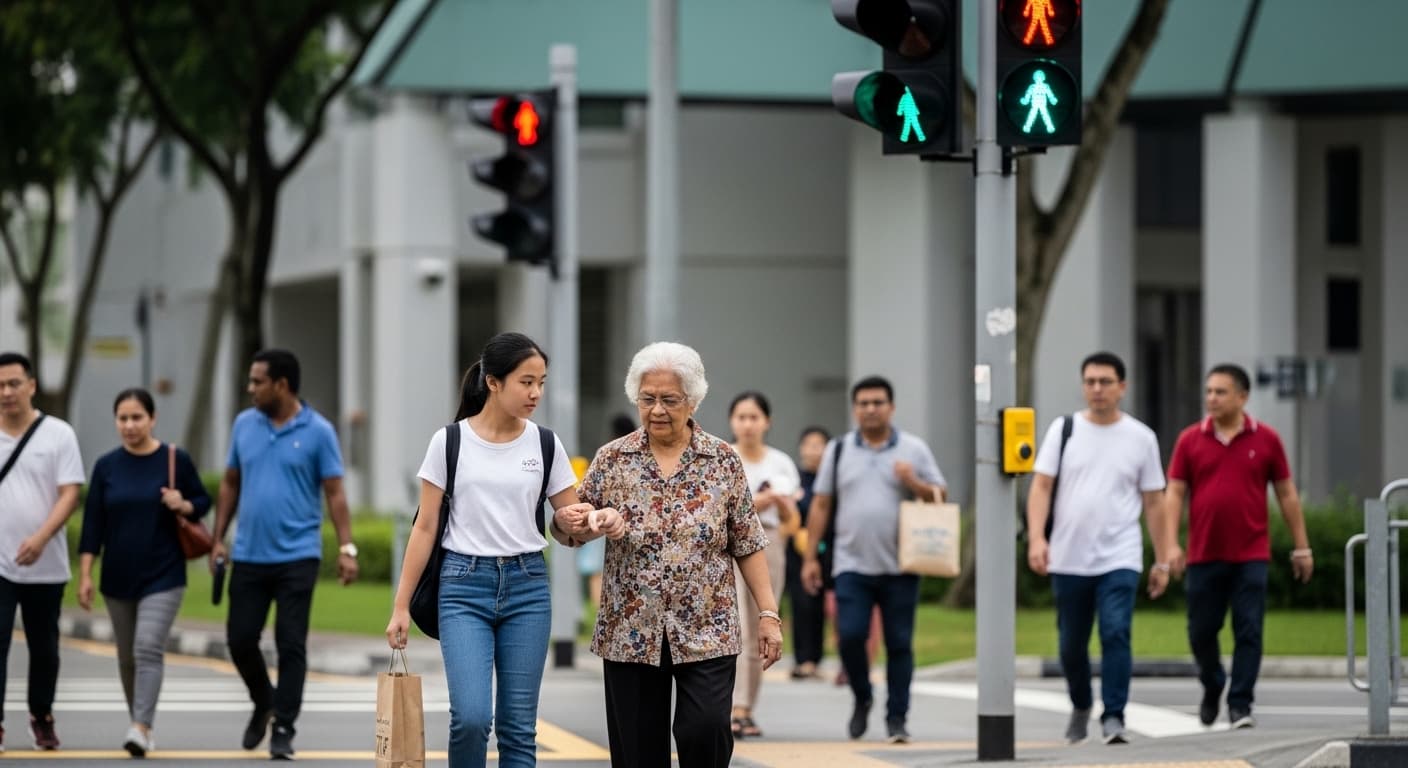
Caring for the Elderly
Elderly-care SBCs test values through inference. Start by naming the small, thoughtful gesture in the photo, then anchor the opinion answer in a real grandparent or neighbour.

Healthy Eating
Healthy-eating Q3 rewards honesty over virtue. Students who admit to enjoying bubble tea and hawker fried food — then talk about balance — score higher than students who pretend.